Blog

  • Tungsten Carbide vs Tungsten-Titanium Pad Printing Rings for Pad Printing: How to Choose?
    Tungsten Carbide vs Tungsten-Titanium Pad Printing Rings for Pad Printing: How to Choose?
    Sep 09, 2026
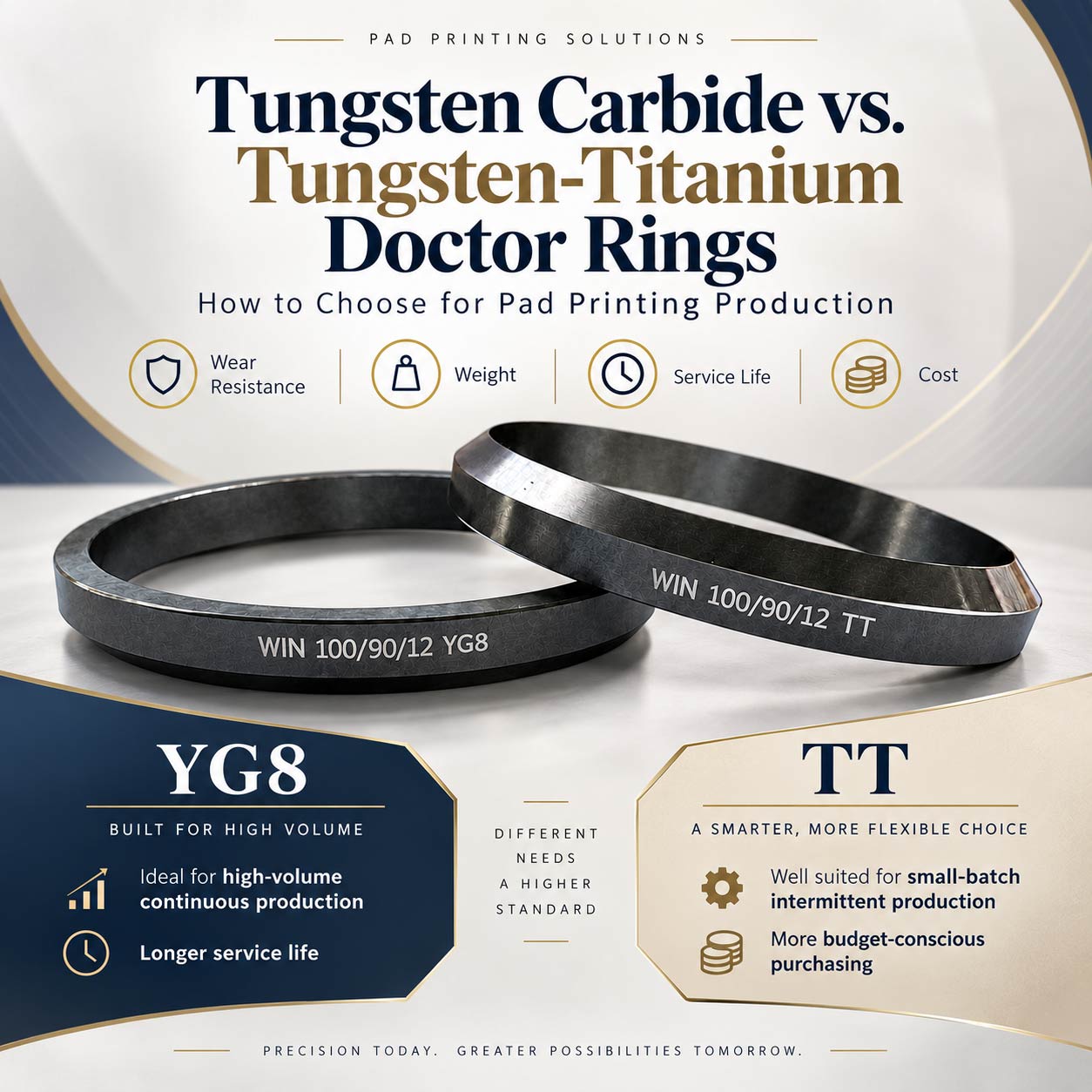
      In pad printing production, the pad printing ring used in a sealed ink cup may look like a small consumable component, but it plays an important role in ink doctoring quality, ink cup movement, production stability, and maintenance frequency. Different pad printing ring materials offer different levels of wear resistance, weight, service life, and cost. For this reason, choosing a pad printing ring should not simply be about selecting the most expensive option. The better approach is to match the ring material with your production volume, operating frequency, application conditions, and cost requirements. WINNEO currently offers two common alloy pad printing ring options: YG8 Tungsten Carbide Ring TT Tungsten-Titanium Ring Although the two rings can have very similar dimensions and appearance, their material composition and application positioning are quite different.   1. Key Differences Between YG8 Tungsten Carbide and TT Tungsten-Titanium Rings Using the WINNEO 100 × 90 × 12 mm test specification as an example, the differences between the two materials are relatively clear. Item YG8 Tungsten Carbide Ring TT Tungsten-Titanium Ring Model YG8 TT Test Size 100/90/12 mm 100/90/12 mm Main Ingredients WC 91%, Co 8%, Other 1% WC 20%, TiC 60%, Co/Ni 18% Scratch Resistance ≥300,000 cycles ≤200,000 cycles Sample Weight 203.64 g 99.31 g Price Positioning More sensitive to tungsten material prices More cost-friendly Recommended Use High-volume continuous production Small-batch or intermittent production It is important to note that: Scratch-resistance cycles should be treated as reference data rather than a guaranteed service-life figure. Actual pad printing ring life depends on many operating factors, including the condition of the printing plate, ink type, doctoring pressure, ink cup installation, machine setup, cleaning and maintenance practices, and the production environment.   Why Is the YG8 Tungsten Carbide Ring Much Heavier? For the same 100/90/12 mm sample size: YG8 Tungsten Carbide Ring: 203.64 g TT Tungsten-Titanium Ring: 99.31 g The difference is significant. This does not come from a difference in ring dimensions. It mainly comes from the different densities of the materials. The YG8 ring contains a high percentage of WC, or tungsten carbide, which has a relatively high density. As a result, a tungsten-carbide-rich ring tends to be considerably heavier at the same dimensions. The TT ring contains a higher proportion of TiC, or titanium carbide, resulting in a lower overall material density and therefore a lighter ring. In this case, product weight provides a simple and intuitive indication of the difference between the two alloy systems.   YG8 Tungsten Carbide Ring: Designed for Higher-Duty Production The primary advantage of the YG8 tungsten carbide pad printing ring is its: higher wear resistance and more stable performance during long-term operation. WINNEO reference testing shows: ≥300,000 doctoring cycles For factories operating pad printing equipment for long periods each day, replacing a pad printing ring involves more than just the cost of the consumable itself. A ring replacement may also require: Machine downtime Ink cup removal Ink cup cleaning Pad printing ring replacement Reinstallation Contact adjustment between the ink cup and printing plate Doctoring tests Production restart For high-volume manufacturing, longer and more stable pad printing ring life can therefore help reduce maintenance frequency and unplanned production interruptions. YG8 is particularly suitable for: High-volume continuous production Ideal when pad printing machines operate for extended periods every day. High-duty printing environments Suitable for applications involving a large number of repeated doctoring cycles. Factories looking to reduce ring replacement frequency Although the initial purchase cost may be higher, longer service intervals can help improve the overall operating cost.     4. TT Tungsten-Titanium Ring: A More Cost-Oriented Alternative Compared with YG8, the TT tungsten-titanium ring uses a lower proportion of tungsten carbide and a higher proportion of materials such as titanium carbide. One direct result is: a lighter pad printing ring with a more cost-friendly purchase price. WINNEO's reference scratch-resistance figure is: ≤200,000 cycles This means that under very intensive, continuous production, its wear resistance is generally lower than that of YG8. However, not every pad printing application requires more than 300,000 doctoring cycles. For example, some factories: operate machines for only a few hours per day; produce relatively small batches; frequently change product models; or mainly handle customized, short-run production. In these situations, extremely long theoretical service life may not provide enough additional value to justify a higher initial material cost. For these users, the TT ring can provide a more economical solution.     5. Why Do Tungsten Prices Affect YG8 Pad Printing Ring Prices? Approximately 91% of the YG8 composition is WC tungsten carbide. This means tungsten-related raw materials represent a significant part of the total material cost. When market prices for tungsten, cobalt, or related materials fluctuate, the manufacturing cost of high-tungsten-content pad printing rings can also change. As a result, customers may occasionally notice that the price of the same tungsten carbide ring specification changes between different purchasing periods. This is not necessarily caused by machining costs alone. Raw material prices can be an important factor. Because the TT ring uses a lower proportion of WC, it can provide a more flexible alternative when purchase cost is an important consideration.     6. How Should You Choose Between YG8 and TT? If your production involves: Long daily machine operating hours High production volume Continuous production runs A strong need to reduce maintenance and ring replacement then: YG8 Tungsten Carbide Ring is generally the more appropriate choice. In these production environments, wear resistance and longer replacement intervals can be more important than the initial purchase price of a single pad printing ring. If your production involves: Small-batch orders Intermittent production Machines that do not operate continuously Greater sensitivity to initial purchasing cost Acceptable pad printing ring replacement frequency then: TT Tungsten-Titanium Ring may provide a more economical solution.   7. Don’t Compare Purchase Price Alone—Consider Total Operating Cost A common mistake when purchasing pad printing consumables is to compare only: the price of one pad printing ring. In real production, however, the total cost should include: pad printing ring cost + replacement frequency + machine downtime + setup time + maintenance labor. For example: A less expensive ring that requires frequent replacement may not necessarily be cheaper over the long term. On the other hand, if production volume is relatively low, purchasing the highest-wear-resistance ring may not provide enough additional economic value. Therefore: The most cost-effective pad printing ring is the one that matches your actual production needs.     8. What Else Affects Pad Printing Pad Printing Ring Life? Material is only one factor affecting pad printing ring life. Actual performance can also be influenced by: Printing plate surface condition Surface roughness, scratches, burrs, or abnormal plate wear can accelerate pad printing ring wear. Contact between the ring and printing plate Excessive ink cup pressure or uneven contact can lead to localized wear. Ink and solvent systems Different inks and solvents may influence the operating conditions of the sealed ink cup system. Machine operating speed Higher-speed continuous operation creates more doctoring cycles within the same period. Installation and cleaning Incorrect installation, removal, or cleaning methods may shorten the practical service life of the ring. For this reason, even when two factories use exactly the same ring model, their actual service life can be quite different. Conclusion: It’s Not About Which One Is Better—It’s About Which One Fits YG8 tungsten carbide and TT tungsten-titanium pad printing rings should not simply be viewed as a “premium” and “basic” option. A more accurate distinction is: YG8: Wear Resistance First Better suited to high-frequency, high-volume, continuous production where reducing ring replacement and machine downtime is important. TT: Cost Flexibility First Better suited to small-batch or intermittent production where initial purchase cost is a more important consideration. The final choice should be based on your machine model, ink cup dimensions, production volume, daily operating hours, and maintenance requirements. If you are unsure which material is suitable for your pad printing application, the selection can also be evaluated according to your existing ink cup size, pad printing ring dimensions, machine model, and production frequency.  
    ĐỌC THÊM
  • Pad-Printing Thin Cliché Plates: Vertical Grain vs. Horizontal Grain — What Is the Real Difference?
    Pad-Printing Thin Cliché Plates: Vertical Grain vs. Horizontal Grain — What Is the Real Difference?
    Sep 02, 2026
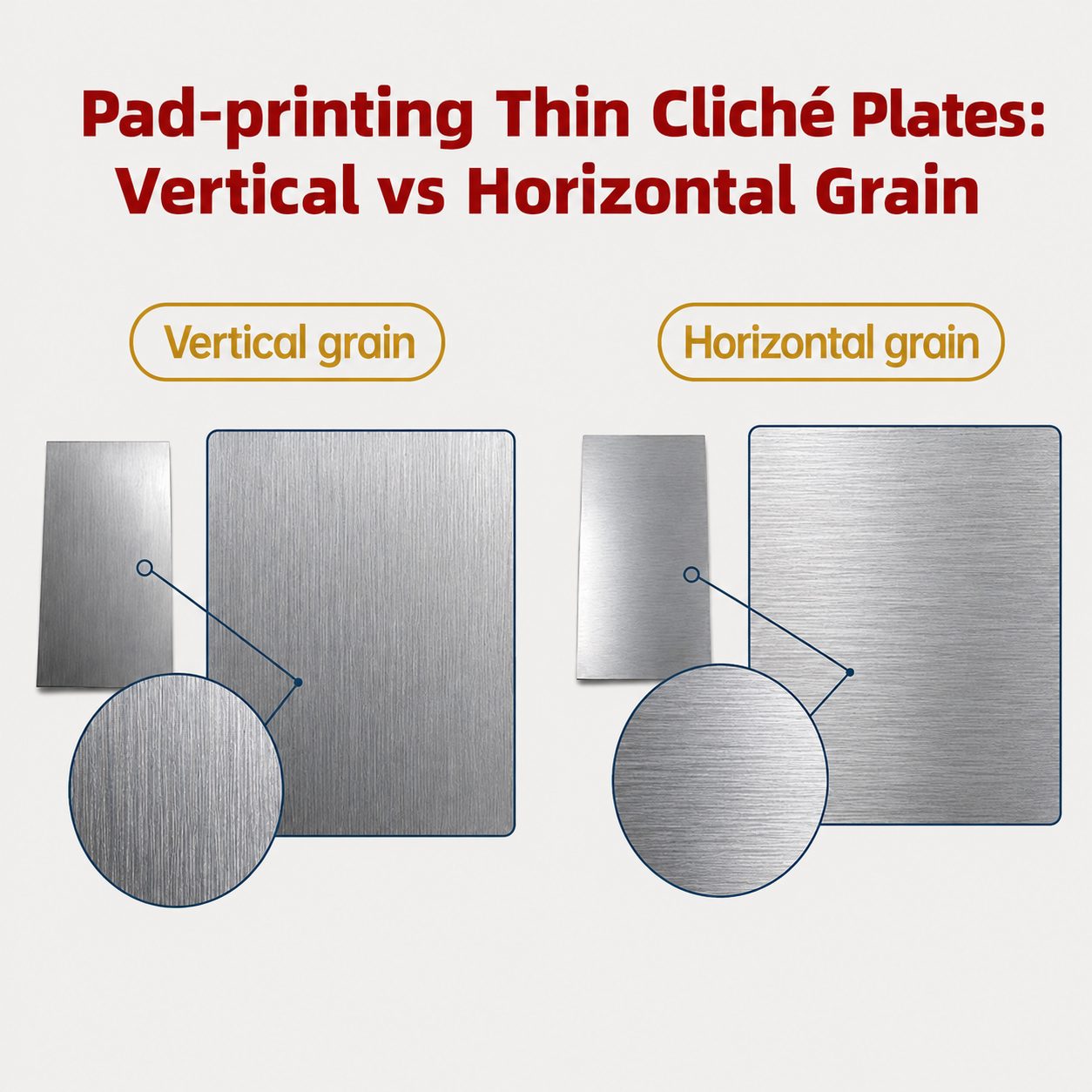
      In pad printing, manufacturers often pay close attention to steel quality, hardness, etching depth and ink formulation. However, there is another small detail that can influence doctoring performance: The grain direction of the cliché plate surface. WINNEO thin cliché plates are manufactured from premium Swedish Sandvik steel. Depending on the application, we provide both standard Vertical Grain plates and customized Horizontal Grain plates. So, what is the actual difference?   1. What Do “Vertical Grain” and “Horizontal Grain” Mean? The terms do not simply refer to how the plate is visually positioned. What really matters is the relationship between the surface grain direction and the doctor-blade or ink-cup travel direction. Vertical Grain: The surface grain runs approximately parallel to the doctoring direction. Horizontal Grain: The surface grain runs approximately perpendicular to the doctoring direction. Although the difference may appear minor, it can influence ink residue during continuous doctoring.     2. Why Can Horizontal Grain Produce Cleaner Doctoring? Even when a cliché plate appears perfectly smooth to the naked eye, its surface still contains very fine microscopic machining lines. These lines can be considered extremely small grooves. When the grain runs parallel to the doctoring direction, some ink can more easily follow these microscopic channels and remain on the plate surface. Depending on the ink viscosity and operating conditions, this may contribute to: •A thin ink film outside the etched image •Slight darkening of the plate after doctoring •Ink streaking •Residual ink lines •Increasing contamination during continuous production With horizontal grain, however, the surface lines run across the doctoring direction. This effectively interrupts the continuous microscopic channels along which ink could otherwise travel. As a result, the doctor blade or ink-cup ring can remove ink from the non-image area more effectively in certain applications. This is why horizontal-grain cliché plates can offer: lower ink residue, cleaner doctoring and more consistent printing performance.     3. Why Is This Particularly Relevant for Closed Ink-Cup Systems? In a closed ink-cup pad-printing system, surface grain influences more than just ink removal. It can also affect the contact condition between the doctor ring and cliché plate. The ceramic or carbide doctor ring needs to maintain stable and continuous contact with the plate. If microscopic surface channels run continuously in the same direction as the ink cup travels, a very small amount of ink may more easily remain within those channels after the ring passes. Horizontal grain interrupts these continuous paths. For this reason, horizontal-grain plates can be particularly useful for applications involving: Larger printing areas Fine or demanding graphics Products sensitive to background ink contamination Low-viscosity inks Continuous production Closed ink-cup systems requiring particularly clean doctoring     4. Why Is Vertical Grain Still the Standard Choice? This does not mean that vertical-grain plates are inferior. In fact, vertical-grain cliché plates perform perfectly well for the vast majority of conventional pad-printing applications. With the correct ink viscosity, a good doctor ring, proper machine adjustment and suitable plate quality, vertical-grain plates can provide highly stable and reliable printing results. This is why WINNEO supplies vertical grain as the standard configuration. Its advantages include: •Broad application compatibility •Mature and stable manufacturing •Suitability for most standard pad-printing jobs •Good cost-performance •Easier stocking and delivery Horizontal grain should therefore be viewed as an application-specific optimization, rather than a replacement for every standard plate.     5. More Visible Grain Does Not Mean Better Doctoring There is another important point: Horizontal grain does not mean that the surface should be rougher. The ideal cliché plate requires: Fine and uniform surface texture Controlled surface roughness Excellent flatness Consistent grain direction Proper compatibility with the doctor ring If the surface texture is excessively rough, even a horizontal grain may contribute to: •Ink trapped inside the surface texture •Faster doctor-ring wear •Ink residue •Unstable doctoring •Printing defects around the image Therefore, cliché-plate performance should never be evaluated solely by asking whether it is horizontal or vertical grain. Steel quality, surface roughness, flatness, etching quality, doctor-ring condition, ink viscosity and machine settings all work together.     6. Which Grain Direction Should You Choose? A practical way to understand the difference is: Vertical Grain — Standard Choice Suitable for the vast majority of conventional pad-printing applications and provides reliable performance under normal operating conditions. Horizontal Grain — Optimized Choice Worth considering when cleaner doctoring is required, or when a customer is experiencing noticeable ink residue or streaking on the plate. However, changing the grain direction alone cannot solve problems caused by poor plate flatness, a worn doctor ring, excessively thin ink or incorrect machine settings. The better approach is to select the cliché plate according to: machine configuration, ink-cup size, image area, ink characteristics and actual doctoring conditions.   WINNEO Recommendation Surface grain may appear to be a small detail, but in pad printing, small details often determine long-term production stability. If you are experiencing: incomplete doctoring, ink residue, streaking, dirty backgrounds or reduced cleanliness during continuous production, in addition to checking the doctor ring, ink viscosity and machine settings, it may also be worth checking: whether the cliché plate grain direction matches your doctoring application. For most standard jobs, vertical grain is sufficient. For applications requiring cleaner doctoring performance, horizontal grain can provide an additional optimization option. The right cliché plate should not only make printing possible — it should help the entire pad-printing system operate more consistently.  
    ĐỌC THÊM
  • Automatic Food Tray Labeling Machine: A Practical C-Wrap Solution for Three- and Four-Side Labeling
    Automatic Food Tray Labeling Machine: A Practical C-Wrap Solution for Three- and Four-Side Labeling
    Aug 17, 2026
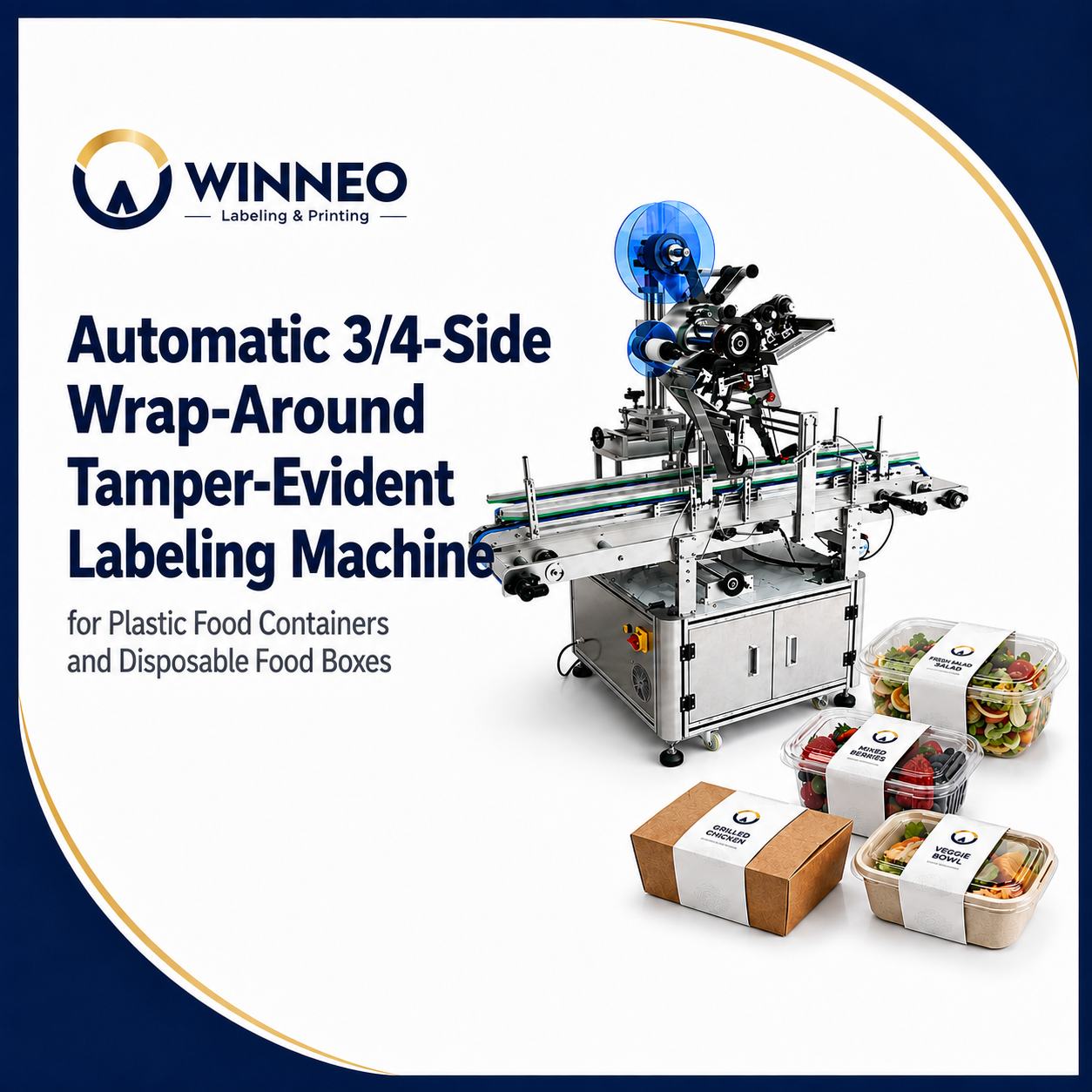
      In fast-growing food categories such as ready meals, fresh produce, salads, and grab-and-go foods, packaging labels must do far more than simply stick to a container. Brand and product information needs to be clearly visible on the top panel, while barcodes, specifications, ingredients, or traceability data must remain readable on the side panels. At the same time, every label must be applied consistently, labeling errors must stay under control, and production speed must keep pace with rising order volumes. Manual labeling and basic flat-surface labelers often struggle to meet all of these requirements at once. Misaligned labels, wrinkles, missed applications, rework, and inconsistent shelf appearance can increase labor costs and weaken customer confidence. For rectangular food trays and clear-lid containers, WINNEO offers an automatic food tray labeling machine that applies one continuous pressure-sensitive label across three sides in a single pass. The same platform can also be customized for four-side wrap labeling. This C-wrap labeling machine combines accurate product positioning, consistent label placement, clear information display, and an added tamper-evident effect—making it a practical upgrade for modern food packaging lines.   Why Are Food Trays Well Suited to C-Wrap Labeling? Food tray packaging has several labeling requirements that are difficult to achieve with separate hand-applied labels: •The top panel must present the brand, product name, and key selling information clearly. •Side panels must carry stable, readable barcodes, specifications, ingredients, or traceability data. •The final package must look consistent across every unit, with less dependence on operator skill. •The labeling process must keep pace with production growth without creating a bottleneck. A conventional process may require several labels and multiple application steps. This increases the risk of inaccurate positioning, wrinkles, missing labels, and inconsistent information placement. By contrast, a C-wrap labeling machine applies a single continuous label in one cycle. The label can cover the top and two opposite sides of the package; a customized four-side configuration can extend the wrap around an additional panel. This approach improves package appearance and creates an additional closure across the lid and tray. For brands that need visible package integrity, the system can also function as a tamper-evident labeling machine while keeping branding, regulatory information, and barcodes on one coordinated label.   Which Products Can This Automatic Food Tray Labeling Machine Handle? The system is particularly suitable for the following food packaging applications: Ready-meal trays Fresh fruit and vegetable containers Salad, deli, sushi, and prepared-food trays Vegetable packaging boxes Disposable food containers Clear-lid clamshell packs for bakery, produce, and grab-and-go foods The best match is a square or rectangular plastic tray with a flat top, a clear lid, and near-vertical side panels. These shapes allow the label to fold smoothly around the package, helping the food tray labeling machine maintain readable information and a clean appearance for retail shelves and e-commerce product images. When the package uses a hinged clear lid, the same configuration may also be described as a clamshell labeling machine. For buyers comparing equipment online, both terms are relevant: “food tray” describes the application, while “clamshell” describes the packaging format.   How the Three- or Four-Side Labeling Process Works 1. Product infeed and spacing: Trays enter the conveyor in a controlled sequence so that each product reaches the labeling station at the correct interval. 2. Product positioning: Guides and holding components stabilize the tray to reduce movement during label application. 3. Label dispensing: The labeling head releases one pressure-sensitive label according to the detected product position. 4. Multi-side wiping and wrapping: The label is pressed onto the top and folded across the selected side panels. The three-sided labeling machine completes the C-wrap in one continuous process; an engineered four-side version can wrap an additional face. 5. Inspection and discharge: The labeled tray leaves the station with branding and required product information presented in a consistent position.   Traditional Labeling vs. WINNEO C-Wrap Labeling Comparison Manual + Basic Flat Labeling WINNEO Automatic C-Wrap Labeling Label use Separate labels for the top and sides One continuous label covers the top and two sides Operation Multiple steps with manual start/stop handling Continuous in-line labeling process Labeling accuracy More operator-dependent variation ±1.0 mm, excluding product and label tolerances Output Lower speed and higher labor cost 15–30 products/min, depending on dimensions Information display Branding and barcode data may be split or incomplete Branding, product data, barcode, and QR code can be coordinated on one label Consistency and rework Higher variation and rework risk Stable positioning helps reduce rework   Core Technical Specifications Parameter Standard Reference Labeling accuracy ±1.0 mm (excluding product and label tolerances) Labeling speed 15–30 products/min (depending on product dimensions) Label roll core diameter 76 mm Maximum label roll outer diameter 280 mm Power supply 220 V Applicable product and label sizes Customized and confirmed for each application Actual specifications are finalized and tested according to the tray dimensions, label material, label layout, and production requirements supplied by the customer.   Frequently Asked Questions 1.What types of food packaging are suitable for C-wrap labeling? The system is best suited to square or rectangular food trays with flat tops and near-vertical side panels. Typical applications include ready-meal trays, fresh produce containers, salads, bakery clamshells, and other clear-lid food packs. 2.What is the difference between a C-wrap labeler and a standard wrap-around labeler? A C-wrap labeler applies one label across three connected faces of a tray, box, or clamshell. In many general web searches, “wrap-around labeler” refers to cylindrical bottles or jars. For rectangular food packs, C-wrap labeling machine or automatic food tray labeling machine is the more accurate product term. 3.Can the machine apply labels to three or four sides? Yes. The standard solution can apply one continuous label across three sides. A four-side configuration can be engineered according to the product shape, label size, folding path, and required information layout. 4.How fast can the machine label products? The standard reference speed is 15–30 products per minute. Actual output depends on tray dimensions, label dimensions, label material, conveyor coordination, and the final configuration. 5.Can WINNEO customize the machine? Yes. WINNEO can configure and test the food packaging labeling machine using the customer’s tray drawings, product samples, label samples, or label artwork. 6.How can I obtain a detailed solution and quotation? Provide the tray dimensions, label sample or drawing, target speed, and photos or video of the existing line. WINNEO can then evaluate compatibility and recommend an appropriate configuration and quotation.   Why Choose a Customized WINNEO C-Wrap Labeling Machine? Founded in 2006, WINNEO is a China-based brand with 20 years of experience in labeling, pad printing, screen printing equipment, and related consumables. We focus on practical machine customization for real products and real production conditions. For food packaging applications, WINNEO supplies three-side and four-side wrap labeling solutions and adjusts each project according to tray dimensions, required output, label material, information layout, and line integration. The goal is not simply to deliver an automatic labeling machine, but to provide a system that can be installed, operated, and maintained reliably in the customer’s production environment. Key advantages include: •Application-specific customization and trial setup based on actual products •Dedicated pre-shipment inspection with test documentation •Complete operation and training videos supplied with the machine •Long-term after-sales and spare-parts support •Competitive cost-performance and controlled lead times •Local distributor support in selected countries Request a Food Tray Labeling Solution If you need food tray labeling equipment that improves brand presentation, keeps product information complete, increases output, and reduces operator-dependent errors, a customized automatic food tray labeling machine is a strong balance of labeling performance and investment cost. Send WINNEO your product drawing, tray dimensions, label sample, target output, or production-line photos. Our team can quickly assess compatibility and recommend a suitable three-side or four-side labeling configuration with a project-specific quotation.  
    ĐỌC THÊM
  • About Ceramic Pad Printing Machine FAQs
    About Ceramic Pad Printing Machine FAQs
    Jul 31, 2026
      The ceramic pad printing machine uses underglaze pad printing technology to transfer detailed patterns precisely onto ceramic bodies or beneath the glaze. After glazing and high-temperature firing, the design becomes integrated with the ceramic surface, delivering clear colors, excellent wear resistance and long-lasting print quality for ceramic cups, bowls, plates, saucers and more. About Ceramic Pad Printing Machine FAQs 1. What is a ceramic pad printing machine? A ceramic pad printing machine uses a flexible silicone pad to transfer patterns, logos or text from an engraved printing plate onto ceramic products. It is particularly suitable for curved, recessed and irregular surfaces. 2. What ceramic products can this machine print? WINNEO Automatic Ceramic Dishes/Plates/Bowls Pad Printing Machine can be configured for ceramic bowls, plates, cups, mugs, saucers, tiles, tableware, decorative ceramics and other shaped ceramic products. Custom fixtures and silicone pads may be required for different products. 3. Can it print on curved or irregular ceramic surfaces? Yes. The flexible silicone pad can adapt to curved and irregular surfaces, making pad printing suitable for areas that are difficult to print using conventional flat printing methods. 4. Can the machine print multiple colors? Yes. Multi-color ceramic pad printing machines can print two or more colors. Accurate color registration depends on the machine configuration, fixture precision, product consistency and process settings. 5. Is the ceramic pad printing process automatic? Yes. Depending on production requirements, the system can support automatic product feeding, positioning, printing, color registration and unloading. Semi-automatic configurations are also available for smaller production volumes. 6. What determines the printing speed? Printing speed depends on the number of colors, image size, ceramic product shape, loading method, ink drying requirements and level of automation. Actual output should be confirmed through product sample testing. 7. Is the printed pattern durable and dishwasher-resistant? We adopt under-glaze pad printing technology paired with ceramic-specific inks.The finished ceramic products are food-grade and safe for daily catering use, featuring excellent resistance to abrasion and chemicals, and are dishwasher-safe.To better meet customers’ practical demands, we still need to conduct verification tests tailored to each client’s actual application scenarios. 8. Does each ceramic product require a custom fixture? In most cases, yes. A suitable fixture keeps the product stable and accurately positioned during printing. Products with different sizes or shapes may require interchangeable or customized fixtures. 9. Can one machine print different ceramic products? Yes. The machine may be adapted to different products by changing the fixture, silicone pad, printing plate and process settings. The printable size and shape must remain within the machine’s working range. 10. What consumables are required? Common consumables include silicone printing pads, printing plates, ceramic-compatible inks, thinners, hardeners and cleaning materials. The exact consumables depend on the printing process and ceramic surface. About WINNEO Specialized in pad printing, screen printing and labeling solutions, we keep innovating to support manufacturers globally. We are dedicated to enhancing your printing processes by providing labeling equipment, pad and screen printing equipment, and related consumables. We work closely with you to deliver targeted solutions—making your print quality our mission and your success our future. WINNEO Specialist in Customized Labeling Machines & Screen Printing ,Pad Printing.
    ĐỌC THÊM
  • How Pad Printing is Revolutionizing Underglaze Ceramic Production? A Complete Guide to the WINNEO 4-Color Ceramic Pad Printing Machine
    How Pad Printing is Revolutionizing Underglaze Ceramic Production? A Complete Guide to the WINNEO 4-Color Ceramic Pad Printing Machine
    Jul 21, 2026
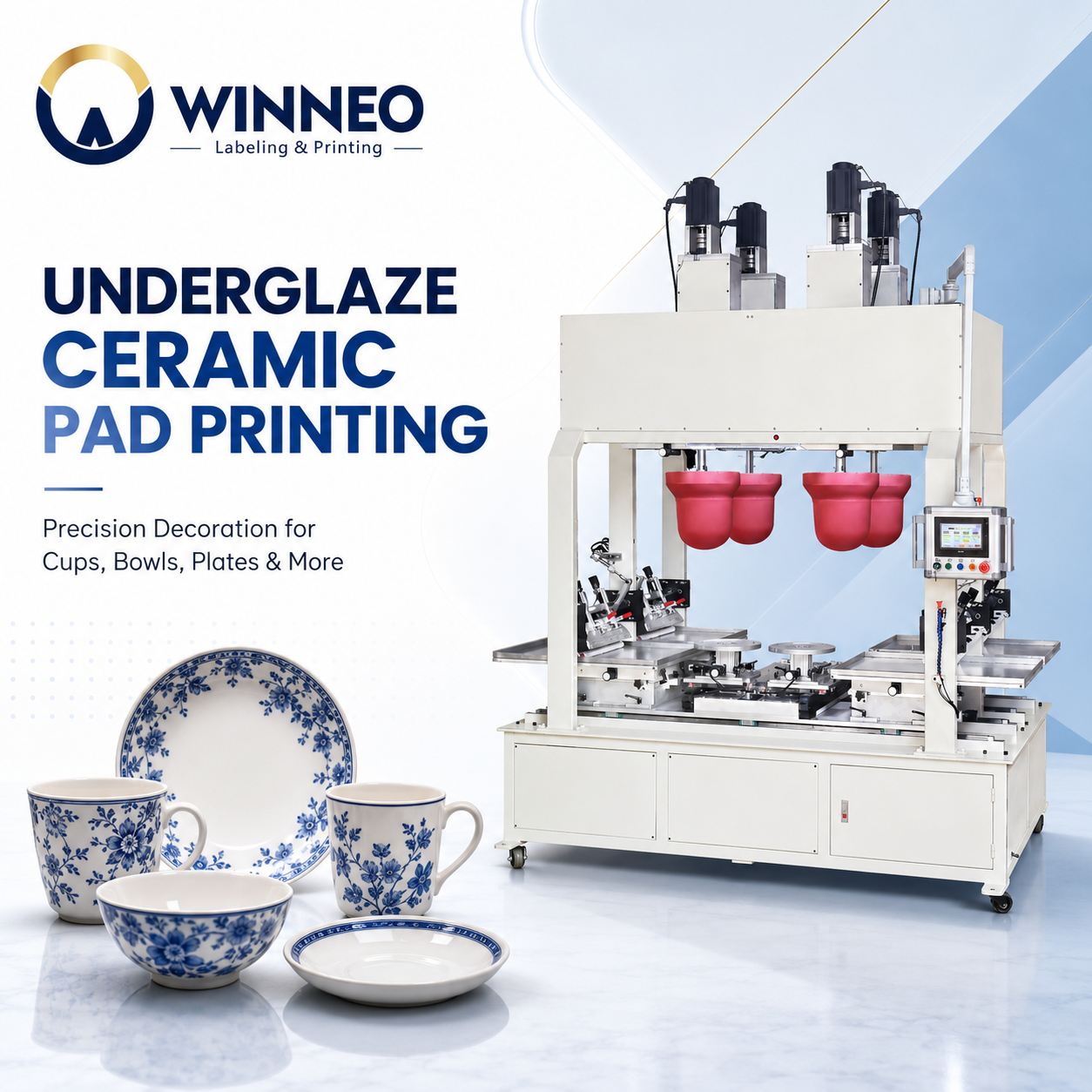
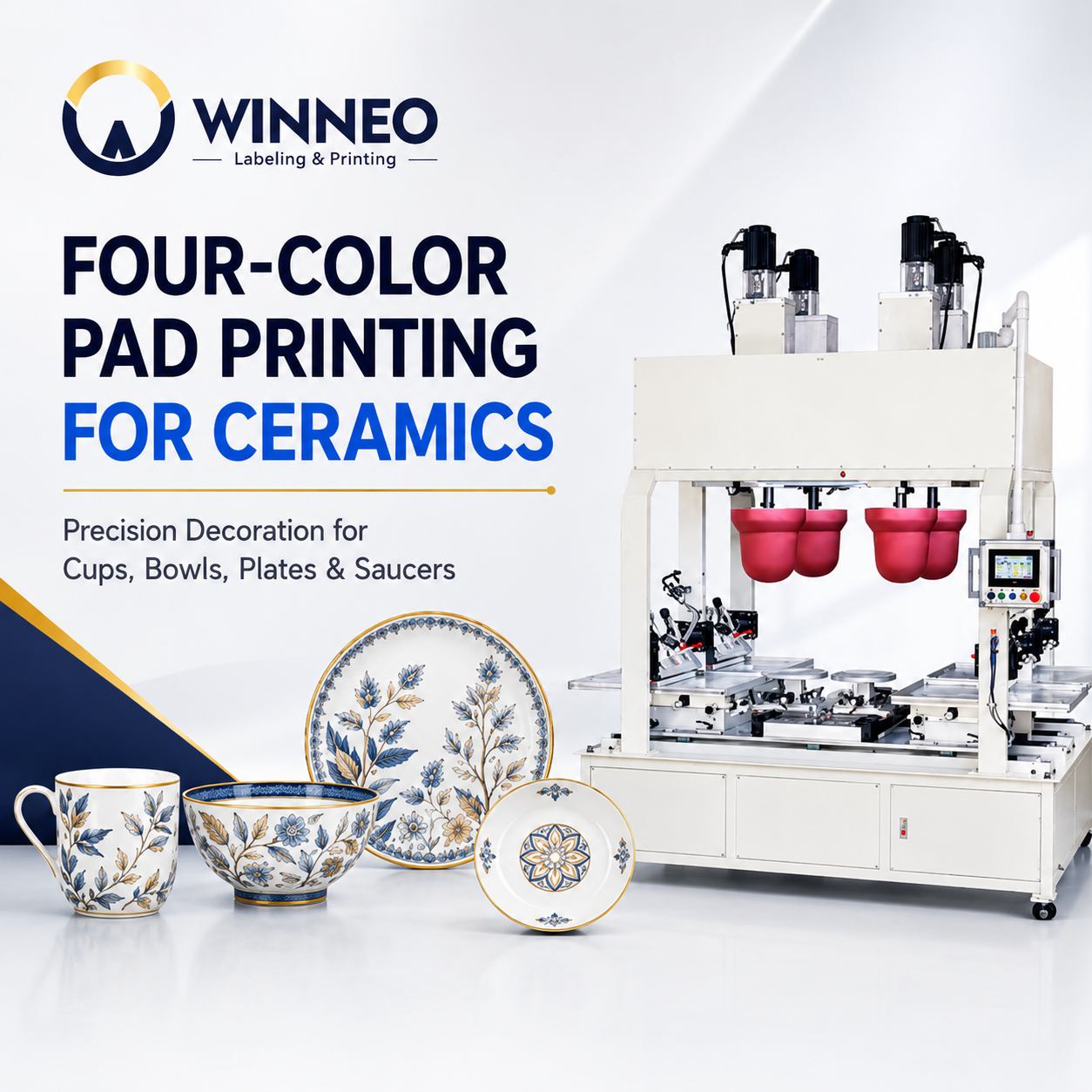
    In the highly competitive ceramic manufacturing industry, the efficiency and quality of decoration processes directly determine a company's profit margins. Attention ceramic manufacturers! Are you still struggling with the following production pain points? ◆ Hand-painting processes are highly costly and inefficient, making it hard to meet large-volume orders. ◆ Traditional screen printing fails to handle complex curved surfaces and irregular shapes perfectly. ◆ Multi-color pattern printing suffers from unstable quality and misalignment, leading to a high rejection rate. If these issues resonate with you, then automated ceramic pad printing technology is the key to breaking through the bottleneck. Today, we will dive deep into how the WINNEO 4-color ceramic pad printing machine is bringing industry-level innovation to underglaze ceramic printing. 1. The Limitations of Traditional Ceramic Decoration For a long time, ceramic surface treatment has relied on manual painting or traditional screen printing. However, as the market demands more personalized and complex patterns, the drawbacks of traditional methods are becoming increasingly obvious: labor costs are rising year by year, and screen printing often falls short when it comes to curved surface ceramic printing. The precision of multi-color overprinting is also hard to guarantee. The industry urgently needs an automated ceramic printing equipment that combines high efficiency, high precision, and high flexibility. 2. The Game Changer: WINNEO 4-Color Ceramic Pad Printing Machine As an industry-leading solution, the WINNEO 4-color ceramic pad printer perfectly balances the triangle of "Efficiency × Quality × Cost Advantage." High Efficiency: With a printing speed of up to 5 products per minute (360 pieces/hour), it easily handles large-scale production. Ultra-Wide Format: Supports an ultra-wide printing range from 50mm to 400mm, meeting diverse needs from mini cups to large dinner plates. 3. Three Core Technical Advantages to Reshape Production Efficiency Advantage 1: Precision Servo Control System for Ultimate Clarity Equipped with advanced servo motors and linear guide rail systems. Compared to traditional pneumatic devices, it not only runs faster and positions more accurately but also operates with extremely low noise. Most importantly, it ensures uniform ink distribution without shifting, bringing the pattern clarity of underglaze ceramic printing to an unprecedented level. Advantage 2: Ultimate Surface Adaptability, Breaking Shape Limits Whether it's flat, curved, or irregular surfaces, the WINNEO pad printing machine can handle it with ease. By customizing silicone pads of various sizes and shapes, it comprehensively covers common categories such as ceramic cups, bowls, plates, and dishes, and can even print perfectly on both inner and outer surfaces, truly solving the industry challenge of curved surface ceramic printing. Advantage 3: Exceptional Cost Control to Boost Profit Margins When it comes to reducing ceramic production costs, the WINNEO 4-color ceramic pad printing machine performs exceptionally well. Its unique pad printing process ensures that the consumption of pigments and inks is far lower than that of screen printing and hand painting. Combined with its high capacity of 360 pieces/hour, it significantly reduces the labor and material costs per unit. 4. WINNEO Ceramic Underglaze Pad Printing Machine: Model Comparison & Selection Different product lines require the most suitable equipment. Please check the model comparison table above to understand the specific parameters and application scenarios of each model. Model Printing Speed Max. Printing Area Suitable Applications WP-CEREMIC-1 600-800 pcs/hour 420 x 420 mm Fast Single-Color Production WP-CEREMIC-2 600 pcs/hour 500 x 500 mm Fine Two-Color Patterns WP-CEREMIC-3 600 pcs/hour 320 x 320 mm Precision Three-Color Printing WP-CEREMIC-4 360 pcs/hour 400 x 400 mm Complex Four-Color Patterns Conclusion & Call to Action From manual to automated, from flat to complex curved surfaces, the WINNEO pad printing machine is redefining the standards of underglaze ceramic printing. If you want to increase capacity, reduce the rejection rate, and significantly cut production costs, now is the best time to upgrade your equipment. Click here to get a free quote Contact our technical experts to customize an exclusive ceramic printing solution for you! About WINNEO Specialized in pad printing, screen printing and labeling solutions, we keep innovating to support manufacturers globally. We are dedicated to enhancing your printing processes by providing labeling equipment, pad and screen printing equipment, and related consumables. We work closely with you to deliver targeted solutions—making your print quality our mission and your success our future. WINNEO Specialist in Customized Labeling Machines & Screen Printing ,Pad Printing.
    ĐỌC THÊM
  • ¡Campeones! Spain Wins the 2026 World Cup — WINNEO Celebrates with Our Spanish Partners!
    ¡Campeones! Spain Wins the 2026 World Cup — WINNEO Celebrates with Our Spanish Partners!
    Jul 20, 2026
              Historic Victory · July 19, 2026 Congratulations, Spain! Spain Is the 2026 FIFA World Cup Champion A celebration of championship spirit, shared values and the global partnerships that continue to inspire WINNEO. 🏆 World Champions A Night of Football History The final whistle has blown, and the world witnessed history — Spain is the 2026 FIFA World Cup Champion! In a breathtaking final on July 19th, La Roja defeated Argentina 1-0 in extra time, with Ferran Torres delivering the decisive blow in the 106th minute. After 16 years, the trophy returns to Spain — and the celebrations are well deserved. Final Result Spain 1–0 Argentina Extra time · Winning goal in the 106th minute 🤝 A Message to Our Partners Here at WINNEO, we are proud to work alongside clients and partners across Spain and the broader Spanish-speaking world. Your passion, precision, and dedication inspire us every day — much like the Spanish national team's relentless spirit on the pitch.   A Champion’s Formula We Share Just like Spain's winning formula — discipline, teamwork, and precision — these are the same values we bring to every labeling and printing solution we deliver. 01 · Discipline Consistent Standards A disciplined approach to every stage of equipment design, production and service. 02 · Teamwork Global Cooperation Close collaboration with clients and partners to create suitable production solutions. 03 · Precision Reliable Performance Accurate labeling and printing solutions designed for stable industrial production. WINNEO Solutions Helping Your Production Line Perform Like a Champion Whether it's high-speed labeling machines, pad printing systems, or custom consumables, WINNEO is committed to helping your production line perform like a champion. High-Speed Labeling Machines Pad Printing Systems Custom Consumables   🏆 Congratulations to Spain and All Our Spanish-Speaking Partners Worldwide! From all of us at WINNEO — ¡Vamos España!
    ĐỌC THÊM
  • Giải quyết thách thức dán nhãn nắp chai chính giữa: Máy dán nhãn kẹp tự động cải thiện chất lượng sản xuất như thế nào?
    Giải quyết thách thức dán nhãn nắp chai chính giữa: Máy dán nhãn kẹp tự động cải thiện chất lượng sản xuất như thế nào?
    Jul 12, 2026
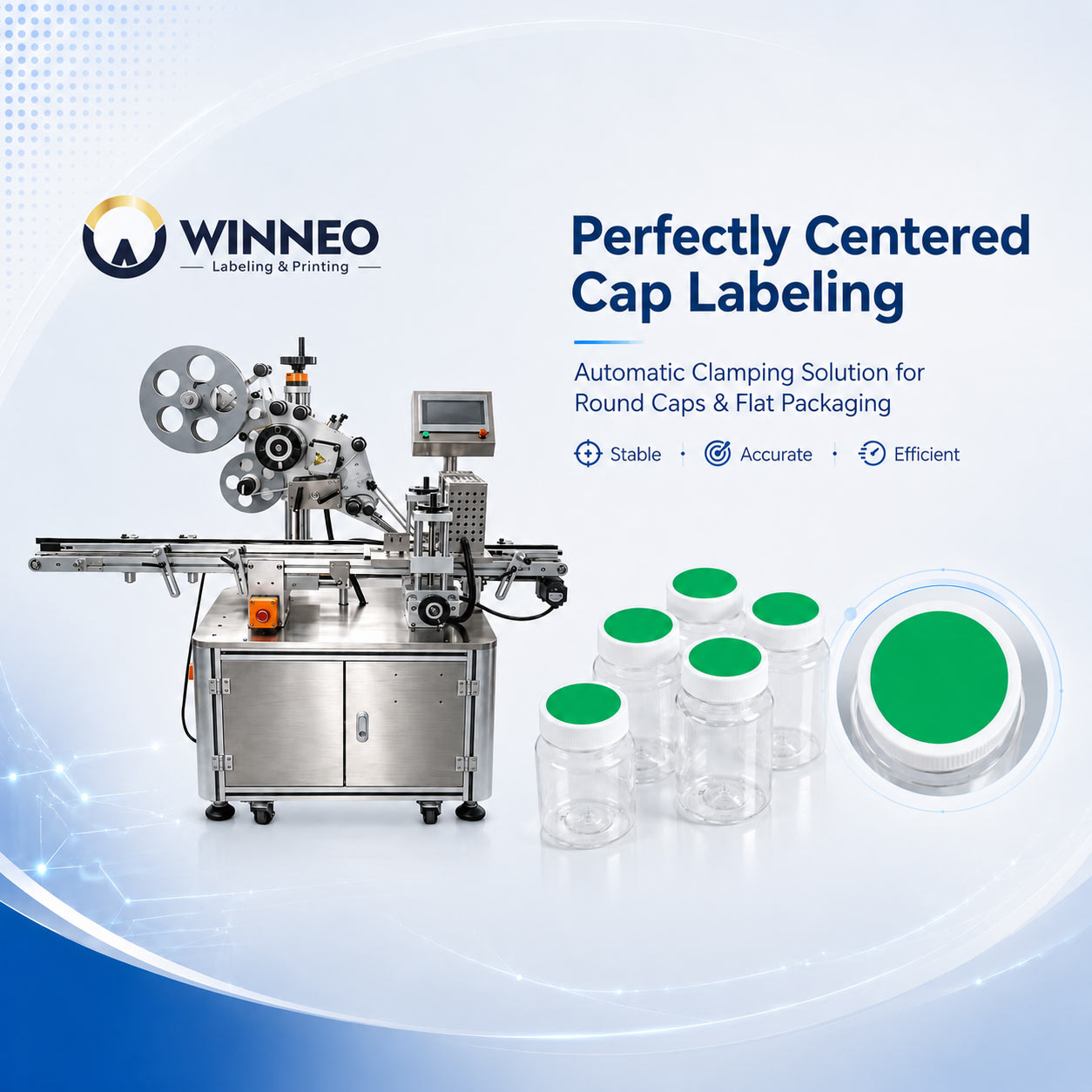
     Giải quyết thách thức dán nhãn nắp chai chính giữa: Máy dán nhãn kẹp tự động cải thiện chất lượng sản xuất như thế nào?Trong nhiều ngành công nghiệp, việc dán nhãn lên bề mặt phẳng tương đối đơn giản.Nhưng khi nói đến nắp chai trònViệc đạt được nhãn dán chính xác ở vị trí trung tâm với tốc độ cao trở thành một thách thức thực sự.Một sai lệch nhỏ cũng rất dễ nhận thấy trên các bề mặt tròn. Ngay cả một sự lệch nhỏ cũng có thể ảnh hưởng đến hình thức tổng thể của bao bì, làm giảm cảm nhận về chất lượng sản phẩm và tăng chi phí làm lại. Đây chính xác là thách thức mà khách hàng của chúng tôi đã gặp phải.Thử thách: Dán nhãn tốc độ cao, căn giữa trên nắp trònĐối với các sản phẩm như:• Chai đựng thực phẩm và đồ uống• Hũ mật ong• Hộp đựng nước sốt• Hộp đựng mỹ phẩm• Chai thuốc chăm sóc sức khỏeKhách hàng thường yêu cầu nhãn phải được đặt chính xác ở giữa nắp chai.Tuy nhiên, trong quá trình dán nhãn:•Các sản phẩm hình tròn có thể dễ dàng xoay hoặc xê dịch trong quá trình vận chuyển.•Việc định vị thủ công dẫn đến kết quả không nhất quán.•Các máy dán nhãn phẳng truyền thống gặp khó khăn trong việc định vị nắp chai với độ chính xác cao.Kết quả là gì?❌ Vị trí dán nhãn không ổn định❌ Tỷ lệ lỗi tăng cao❌ Phát sinh thêm chi phí nhân công cho việc dán nhãn lại❌ Chi phí sản xuất cao hơnGiải pháp: Công nghệ định vị kẹp tự độngĐể giải quyết vấn đề này, chúng tôi đã phát triển một giải pháp. Máy dán nhãn kẹp phẳng tự động Được trang bị cơ chế kẹp chuyên dụng.Hệ thống kẹp hoạt động như một bộ phận định vị:✅ Giúp ổn định sản phẩm trong quá trình vận chuyển✅ Ngăn chai di chuyển trong quá trình dán nhãn✅ Đảm bảo định vị chính xác ở trung tâm✅ Cải thiện tính nhất quán trong sản xuất hàng loạtBằng cách kết hợp hệ thống điều khiển chính xác với định vị cơ khí, máy đạt được hiệu suất dán nhãn ổn định và lặp lại tốt.Cấu hình kỹ thuậtĐể đảm bảo hoạt động đáng tin cậy, máy tích hợp các linh kiện công nghiệp chất lượng cao:⚙ Hệ thống điều khiểnPLC Panasonic⚙ Cảm biến phát hiện sản phẩmCảm biến Panasonic SUNX + Hệ thống cảm biến chính xác⚙ Nhãn Hệ thống truyền động và lực kéoHệ thống động cơ bước Leadshine⚙ Hệ thống kẹp và truyền độngHệ thống động cơ bước LeadshineCải thiện hiệu suấtSau khi nâng cấp lên giải pháp dán nhãn kẹp tự động:Độ chính xác của nhãn±1mmTốc độ dán nhãn40–80 chiếc/phútChất lượng sản phẩmNăng suất cao với độ ổn định cao trong việc dán nhãn.Hoạt độngDễ dàng điều chỉnh và thiết lập thuận tiệnTính linh hoạt của ứng dụngSau khi điều chỉnh, máy có thể xử lý nhiều loại sản phẩm khác nhau trong phạm vi kích thước phù hợp, bao gồm:• Chai tròn• Sản phẩm dạng phẳng• Hộp• Thùng chứaSự tiến hóa của công nghệ ghi nhãn1.0 Máy dán nhãn bán tự động độ chính xác cao (WT101)2.0 Máy dán nhãn phẳng hoàn toàn tự độngWT303)3.0 Máy dán nhãn kẹp phẳng tự động✔ Độ chính xác cao (lên đến ±0,2mm)✘ Cần phải nạp hàng thủ công✘ Hiệu suất sản xuất hạn chế✘ Tốc độ: 15–25 chiếc/phút✔ Tốc độ sản xuất nhanh hơn✔ Thích hợp cho hầu hết các sản phẩm phẳng✘ Vẫn chưa thể giải quyết hoàn hảo vấn đề dán nhãn nắp chai chính xác cao.✔ Khả năng dán nhãn nắp chính giữa✔ Sản xuất tốc độ cao✔ Chất lượng đầu ra ổn định✔ Điều chỉnh đơn giảnCấu trúc kẹp tạo ra một khả năng mới:Độ chính xác cao + Hiệu quả cao + Tính linh hoạt caoKết quả kinh doanh cho khách hàngViệc nâng cấp này đã mang lại những cải tiến có thể đo lường được:Hình thức sản phẩm tốt hơnNhãn dán được căn giữa hoàn hảo giúp nâng cao chất lượng bao bì và làm cho sản phẩm trông cao cấp hơn trên kệ.Giảm chi phí nhân côngBằng cách loại bỏ việc sửa lỗi thủ công lặp đi lặp lại:Từ 2–3 toán tử → 1 toán tửGiảm lượng chất thải ghi nhãnLượng nhãn tiêu thụ giảm khoảng 20%Chất lượng sản xuất được cải thiệnTỷ lệ nhãn dán bị lỗi:Trước đây: 15–20%Sau khi nâng cấp: 0%Phần kết luậnĐối với các nhà sản xuất yêu cầu dán nhãn chất lượng cao và nhất quán trên nắp tròn và bao bì phẳng, định vị chính xác là yếu tố then chốt.Máy dán nhãn kẹp tự động cung cấp một giải pháp thiết thực bằng cách kết hợp:✔ Định vị sản phẩm ổn định✔ Kiểm soát nhãn mác chính xác✔ Tự động hóa tốc độ cao✔ Khả năng ứng dụng linh hoạtMột cải tiến nhỏ về mặt cơ khí — cơ chế kẹp — có thể tạo ra sự nâng cấp đáng kể về hiệu quả sản xuất và chất lượng sản phẩm.Bạn cần giải pháp dán nhãn nắp chai chính giữa?Hãy gửi cho chúng tôi đường kính nắp, kích thước sản phẩm, kích thước nhãn, tốc độ yêu cầu và ảnh mẫu. Các kỹ sư của chúng tôi sẽ đánh giá ứng dụng và đề xuất cấu hình dán nhãn phù hợp. Liên hệ WINNEO qua WhatsApp Hãy liên hệ với WINNEO bằng cách điền vào mẫu đơn.
    ĐỌC THÊM
  • Why is D2 thick cliché plate the preferred choice for acidic substrates? The secret behind a one-million-impression lifespan.
    Why is D2 thick cliché plate the preferred choice for acidic substrates? The secret behind a one-million-impression lifespan.
    Jun 24, 2026
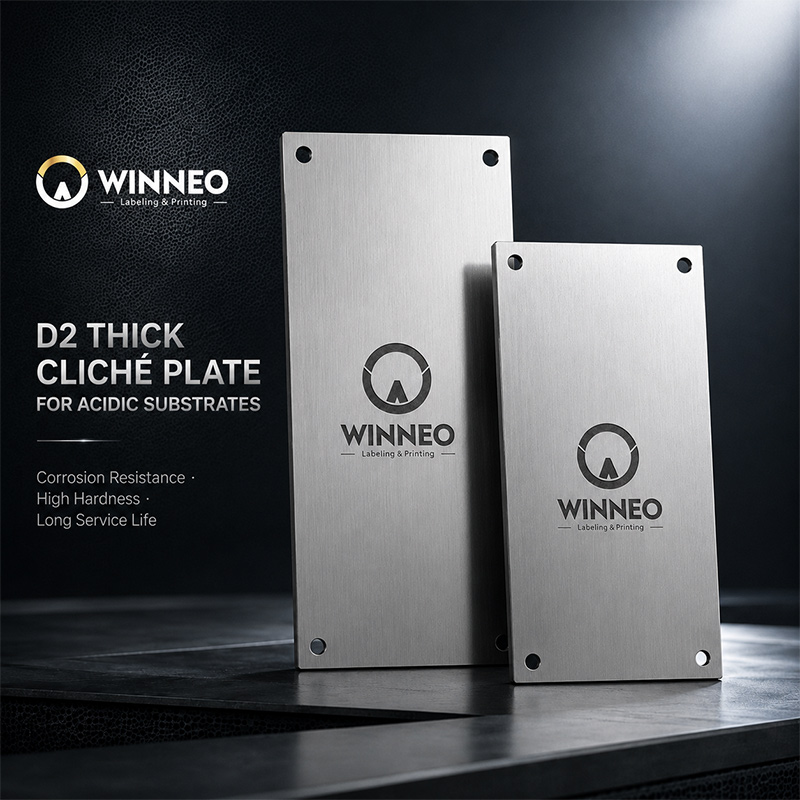
    Have you encountered issues such as premature corrosion of steel pad-printing plates or a decline in print quality? This may be due to excessive acidity in the substrate or the failure to select rust-resistant chromium steel for the plates.   An acidic environment accelerates the oxidation and corrosion of the steel plate, leading to: 1. Blurred edges of the printed pattern 2. Pitting on the steel plate surface 3. Significantly reduced printing lifespan   Three Key Advantages of the D2 Thick Cliché Plate: I. Exceptional Corrosion Resistance Its high chromium content (approximately 12%) provides excellent rust resistance, earning it the designation "semi-stainless steel."   II. Ultra-High Hardness and Wear Resistance ●Hardness reaches HRC 63 ± 1 after heat treatment. ●Scratch resistance withstands 600,000 to 1,000,000 cycles (7–10 times that of thick cliché plate 【Z01】) service life of standard Z01 thick cliché plate. III. Long-term Cost-Benefit Analysis Although WINNEO (D2) thick cliché plates require a higher initial investment, their service life is 5 to 10 times longer; this reduces the frequency of downtime for replacements and ensures consistent print quality, thereby lowering overall production costs. Furthermore, thanks to heat treatment, WINNEO’s high-quality chrome (D2) thick cliché plates can be reground and refurbished more than five times while maintaining performance comparable to that of a new plate.   IV. WINNEO Pad Printing Steel Plates–(D2) thick cliché plates Application Scenarios ●Electronic products (plastic parts with acidic coatings) ●Medical devices (requiring chemical corrosion resistance) ●Automotive components (exposed to corrosive environments)●Cosmetic packaging (containing alcohol and acidic ingredients) Our Commitment WINNEO will continue to provide customers with reliable machinery and equipment, high-quality services, and ample consumable supply solutions to ensure the normal operation of equipment and promote business growth.   We are not just your product supplier, but also your partner: Before sales, we actively work with you to determine product solutions; during sales, we improve and adjust products according to specific needs, and send product videos so you can witness the product in operation or be shipped firsthand. After sales, we can provide local or remote training and guidance for any related issues.   As a professional provider of pad screen printing and labeling products and services, WINNEO will provide solutions and continuous innovation for factories and users worldwide.
    ĐỌC THÊM
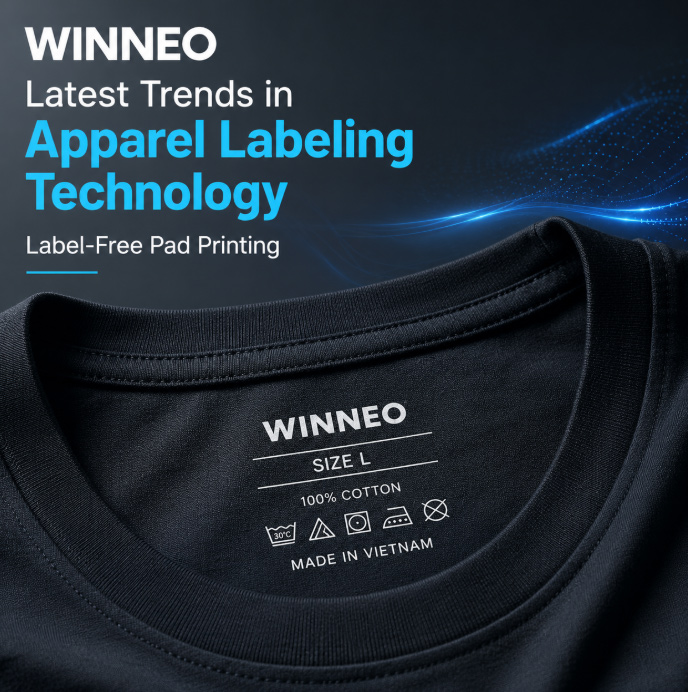
  • WINNEO Latest Trends in Apparel Labeling Technology — Label-Free Pad Printing
    WINNEO Latest Trends in Apparel Labeling Technology — Label-Free Pad Printing
    Jun 05, 2026
    Label-free pad printing is a more cost-effective and flexible alternative to heat transfer printing and sewn labels.    Traditional garment factories still rely on screen printing or heat transfer printing for labeling. Screen printing has obvious limitations: it requires the fabric to be completely flat. However, finished garments feature curved necklines, uneven side seams and soft materials. When screen printing is forced onto these irregular surfaces, the screen stencil cannot fit closely against the fabric, resulting in incomplete patterns, ghosting, and even damage to the garments.   Heat transfer labels, by contrast, come with higher costs and longer production lead times, plus poor durability. Since heat transfer films are merely attached to the fabric surface, the labels tend to crack and deform after repeated bending, stretching or washing.     What’s more, heat transfer labeling requires at least two pieces of equipment: a printer and a heat press. Both devices increase energy consumption and generate large amounts of waste. The backing paper of heat transfer films is discarded after application, creating extra waste and bringing adverse impacts on environmental protection.     Advantages of Pad Printing   1.Excellent conformability Equipped with soft silicone pads that work just like stamps, the pads can flex freely and fit perfectly onto uneven surfaces. It can print labels directly on curved necklines, cuffs and wrinkled areas. This technology is applicable to all types of apparel, ranging from underwear to outerwear.   2.Superior durability The printing ink penetrates deep into the fabric and becomes an integral part of the garment. The pad printed labels can withstand numerous washes without cracking or peeling off.   3.High efficiency   Compared with other labeling methods, pad printing features instant drying. No heat bonding or additional dryers are required. This outstanding advantage is not only a major plus for apparel labeling manufacturers, but also an indispensable tool to help them expand their market share.       Advantages of Label-Free Pad Printing over Sewn Labels, Heat Transfer Labels and Screen Printed Labels         Components of WINNEO Fully Electric Tagless Printing Machine (Fabric Label Printing Machine)   1. WINNEO Tagless Printing Machine  This standalone label-tagless pad printing machine is specially developed by WINNEO for label printing on garments and fabrics: Fully electric design Low operating noise. No additional air compressor is required. The positioning accuracy reaches up to ±0.02mm. Fabric holding fixture Equipped with adhesive mats to fix fabrics firmly without causing damage. Built-in laser positioning cursor also makes alignment much easier. Shuttle-type silicone pads The pads move back and forth automatically for color printing. Frequent adjustment is not needed, so the machine is easy to operate. Even new operators can handle printing work effortlessly.     2. Pad Printing Plates (Clichés) We supply a full range of plate materials for printing applications, including:Compatible with Z01 thick plates, Z02 thick plates, D2 thick plates, ZT thick plates , carbon steel plates, stainless steel plates,aluminum plates,ceramic plates, etc.     3. Silicone Pads Garments vary in print pattern size and require pads with different hardness and softness. Besides standard silicone pads, WINNEO also provides customized pads to meet diverse demands.With 20 years of experience in the pad printing industry, we have built a comprehensive silicone pad database. Our professional team is ready to offer technical support and recommendations to help you select the most suitable pads.     4. Ink Cups & Rings Spare ink cups and blade rings are provided to improve ink changing efficiency.Our ink cups are compatible with equipment of other brands and available at competitive prices. We can also recommend matched blade rings according to your production capacity, helping you achieve optimal printing results within your budget.     5. Printing Inks Apparel pad printing inks need not only good printability, but also meet the following requirements: 1、Non-irritating to skin for comfortable wear; 2、Excellent wash and abrasion resistance: no color fading after repeated washing and long-term use; 3、Resistant to cracking when stretched.   Garment materials cover cotton, polyester, nylon, spandex, PU leather and various blended fabrics, all with distinct surface properties. Therefore, our inks are specially formulated to match different fabrics: 1、Good penetration and adhesion on natural fibers; 2、Strong surface bonding performance on chemical fibers; 3、Reliable stable adhesion on elastic materials.
    ĐỌC THÊM
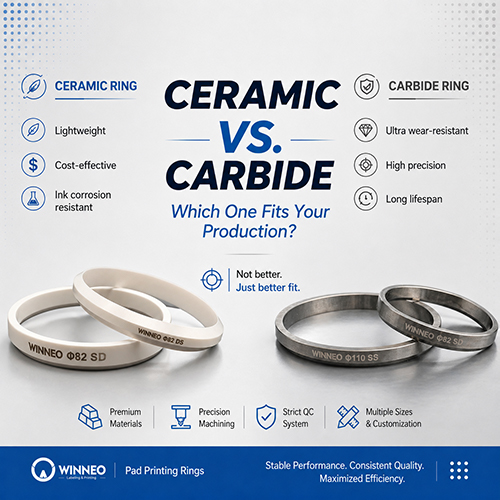
  • 【Ceramic vs Carbide 】Ink Cup Rings — Which One Should You Choose?
    【Ceramic vs Carbide 】Ink Cup Rings — Which One Should You Choose?
    May 22, 2026
    “Ceramic or carbide?” This is where most buyers get stuck. But the truth is: It’s not about which is better   It’s about which fits your pad printing machine and specific ink cups setup.     Quick Comparison Both materials serve different roles in modern pad printing ink cup systems. The choice directly impacts ink transfer quality, seal longevity, and line throughput.         How to Choose (Based on Your Application) ✅ Go for Ceramic Rings if you: l Run small batches / multiple SKUs l Use corrosive inks in your pad printing ink cup l Need a cost-effective & flexible solution l Prefer lighter equipment load on your press     ✅ Go for Carbide Rings if you: l Run high-volume, continuous production l Require high precision & consistency across every ink cups cycle l Operate in high-temperature environments l Want to minimize downtime & maintenance for your pad printing machine What Actually Matters Choosing the right ring is really about optimizing your:   ✔ Production stability ✔ Maintenance frequency ✔ Downtime ✔ Overall efficiencyNot just the material. About WINNEO Pad Printing Rings In real production, consistency is everything:   lPremium raw materials + heat treatment → durability & corrosion resistance lCNC precision machining → tight tolerances & tight tolerances & stability for any pad printing ink cup l100% inspection + simulation testing → reliable performance lMultiple sizes & customization → tight tolerances & stability for any pad printing ink cup     Bottom line: The best ring isn’t ceramic or carbide — it’s the one engineered for your pad printing machine workflow. If you're evaluating ink cup rings for your line,If you're evaluating ink cups or upgrading your pad printing ink cup components for your line Feel free to share your application — happy to exchange insights.
    ĐỌC THÊM
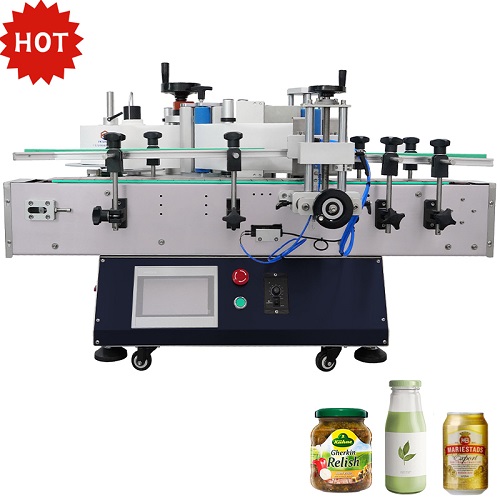
  • Cách thức hoạt động của máy dán nhãn cho túi nhựa và chai thủy tinh
    Cách thức hoạt động của máy dán nhãn cho túi nhựa và chai thủy tinh
    Jan 13, 2026
    Trong bối cảnh sản xuất và đóng gói hiện đại, hình thức trình bày trực quan của sản phẩm cũng quan trọng không kém chất lượng sản phẩm. Cho dù đó là một chai thủy tinh bóng bẩy chứa đồ uống cao cấp hay một túi nhựa dẻo đựng đồ ăn nhẹ hữu cơ, nhãn mác đóng vai trò là cầu nối chính giữa thương hiệu và người tiêu dùng. Tuy nhiên, việc dán nhãn một cách chính xác, nhanh chóng và nhất quán là một kỳ công kỹ thuật phức tạp. Hiểu được cách máy dán nhãn thích ứng với các vật liệu khác nhau—đặc biệt là bề mặt cứng, hình trụ của chai thủy tinh và bề mặt mềm dẻo, thường không bằng phẳng của túi nhựa—cho thấy tính linh hoạt đáng kinh ngạc của công nghệ đóng gói.  Những nguyên lý cơ bản của công nghệ ghi nhãn Về cơ bản, bất kỳ hệ thống dán nhãn nào cũng phải đồng bộ hóa ba chuyển động quan trọng: tốc độ của băng tải sản phẩm, tốc độ phân phối nhãn và áp lực dán. Mặc dù logic cơ bản vẫn nhất quán, cấu hình phần cứng lại khác nhau đáng kể tùy thuộc vào hình dạng của bao bì. Đối với các nhà sản xuất quy mô nhỏ hoặc các thương hiệu nhỏ, Máy dán nhãn để bànSản phẩm này mang lại sự cân bằng hoàn hảo giữa kích thước và hiệu quả. Các thiết bị nhỏ gọn này được thiết kế để xử lý nhiều loại bao bì khác nhau, cho phép các doanh nghiệp chuyển đổi từ phương pháp dán thủ công sang phương pháp tự động chính xác mà không cần diện tích mặt bằng công nghiệp khổng lồ. Cấu tạo của máy dán nhãn tự động Mỗi máy dán nhãn thường bao gồm các bộ phận sau:Giá đỡ cuộn giấy: Dùng để giữ cuộn nhãn dán tự dính.Tấm bóc nhãn: Một cạnh sắc giúp tách nhãn ra khỏi lớp giấy lót (lớp nền).Động cơ truyền động: Điều khiển thời gian phân phối nhãn.Bộ phận dán nhãn: Là thành phần (con lăn, cọ hoặc máy hút bụi) dùng để cố định nhãn lên sản phẩm.  Độ chính xác trên các đường cong: Dán nhãn chai thủy tinh Chai thủy tinh đặt ra một thách thức riêng do độ cứng và trọng lượng của chúng. Hầu hết các chai thủy tinh đều có hình trụ, đòi hỏi kỹ thuật "quấn quanh" để đảm bảo nhãn được đặt ở giữa và không bị nổi bọt khí.Phương pháp quấn quanh Khi một chai thủy tinh di chuyển dọc theo dây chuyền, nó thường được định vị bằng vít định thời hoặc bánh xe phân tách để đảm bảo nó chạm vào đầu dán nhãn đúng thời điểm. Đối với các vật chứa hình tròn, Máy dán nhãn chai trònSử dụng "trạm đóng gói" chuyên dụng. Khi chai đến bộ phận dán nhãn, mép trước của nhãn được ghim vào thủy tinh. Đồng thời, một băng tải có động cơ hoặc một bộ con lăn sẽ xoay chai tại chỗ. Chuyển động xoay này kéo phần còn lại của nhãn lên bề mặt, đảm bảo dán liền mạch 360 độ hoặc dán thẳng hàng hoàn hảo cả mặt trước và mặt sau. Khắc phục những khuyết điểm của thủy tinh Mặc dù thủy tinh cứng chắc, nhưng nó không phải lúc nào cũng hoàn hảo. Những sai lệch nhỏ về đường kính chai (gọi là "độ côn") có thể khiến nhãn bị "xoắn ốc" hoặc nghiêng. Máy dán nhãn chai tròn cao cấp bù đắp cho điều này bằng cách cho phép đầu dán nhãn nghiêng nhẹ, phù hợp với hình dạng cụ thể của chai. Mức độ điều chỉnh này là lý do tại sao các hệ thống tự động vượt trội hơn hẳn so với lao động thủ công trong ngành công nghiệp đồ uống và dược phẩm sản xuất số lượng lớn.  Tính ổn định trên nền tảng tính linh hoạt: Ghi nhãn túi nhựa Việc dán nhãn lên túi nhựa hoặc bao bì nhựa là một vấn đề hoàn toàn khác. Không giống như thủy tinh, túi nhựa mềm dẻo, nhẹ và dễ bị nhăn. Nếu bạn cố gắng dán nhãn lên túi khi nó đang chứa đầy sản phẩm, bề mặt không bằng phẳng thường dẫn đến không khí bị kẹt và nhãn bị lệch. Phương pháp "Bằng phẳng trước"Để có vẻ ngoài chuyên nghiệp, túi nhựa hầu như luôn được dán nhãn khi chúng còn trống và phẳng. Điều này đảm bảo bề mặt của túi có độ đồng nhất như một tờ giấy. Để xử lý vấn đề này, các nhà sản xuất sử dụng một loại máy dán nhãn chuyên dụng. Máy dán nhãn phẳng cho túiĐược trang bị bộ cấp liệu tự động bằng ma sát. Quy trình hoạt động như sau: 1. Cấp liệu: Một chồng bao rỗng được đặt vào bộ cấp liệu. Một bánh xe ma sát tốc độ cao sẽ "tách" bao dưới cùng khỏi chồng bao và đẩy nó lên băng tải hút chân không.2. Ổn định: Dây đai hút chân không sẽ ép túi xuống phẳng, ngăn không cho túi bị xê dịch hoặc rung lắc khi di chuyển về phía đầu dán nhãn.3. Ứng dụng: Nhãn được phân phối từ phía trên. Vì túi phẳng và được đỡ bởi băng tải, máy có thể tạo áp lực đáng kể thông qua con lăn cao su để đảm bảo chất kết dính bám dính ngay lập tức vào nhựa.  Những điểm khác biệt chính trong việc xử lý vật liệu Tính năngNhãn chai thủy tinhNhãn dán túi nhựaTrạng thái vật chấtCứng cáp và nặng nềLinh hoạt và nhẹVấn đề thường gặpSủi bọt và méo móNếp nhăn và tĩnh điệnXử lý sản phẩmĐược định vị bằng các vít điều chỉnh thời gianĐược cấp liệu bằng bộ cấp liệu ma sát.Kiểu ứng dụngBao quanh hoặc tấm ốp bênỨng dụng phẳng từ trên xuống  Vai trò của chất kết dính Chất liệu cũng quyết định loại keo dán được sử dụng. Thủy tinh không xốp và có thể lạnh hoặc ẩm (đặc biệt là trong quá trình đóng gói đồ uống), đòi hỏi keo dán chống ẩm. Túi nhựa, thường được làm từ polyetylen hoặc polypropylen, có "năng lượng bề mặt thấp", nghĩa là nhãn cần keo dán có độ bám dính cao để ngăn các cạnh bị bong tróc theo thời gian (hiện tượng này được gọi là "bong tróc").  Tại sao tự động hóa lại quan trọng Việc chuyển từ dán nhãn thủ công sang máy dán nhãn để bàn hoặc dây chuyền tích hợp hoàn chỉnh mang lại ba lợi ích chính: 1. Độ chính xác và thương hiệu Một nhãn dán lệch trên chai nước hoa cao cấp hoặc một miếng dán không thẳng hàng trên bao bì cà phê sẽ gửi tín hiệu về chất lượng kém đến người tiêu dùng. Tự động hóa đảm bảo rằng mọi sản phẩm đều trông giống hệt nhau, củng cố niềm tin vào thương hiệu. 2. Hiệu suất thông lượng Một người lao động thủ công có thể dán nhãn từ 5 đến 10 chai mỗi phút với độ chính xác khác nhau. Một máy dán nhãn chai tròn cơ bản có thể dễ dàng xử lý từ 30 đến 60 chai mỗi phút, trong khi các dây chuyền công nghiệp tốc độ cao có thể vượt quá 200 chai mỗi phút. 3. Giảm thiểu chất thải Việc dán nhãn thủ công thường dẫn đến tình trạng "mất" nhãn do lỗi của con người—sai lệch vị trí thường khiến nhãn bị bóc ra và vứt đi. Máy móc sử dụng cảm biến (mắt quang điện) để phát hiện sản phẩm và khoảng cách giữa nhãn, giảm thiểu lãng phí xuống gần như bằng không.  Lựa chọn máy móc phù hợp cho doanh nghiệp của bạn Nếu doanh nghiệp của bạn đang phát triển, việc lựa chọn thiết bị hoàn toàn phụ thuộc vào hình thức đóng gói của bạn. Đối với các nhà sản xuất bia thủ công và rượu vang: Máy dán nhãn chai tròn là tiêu chuẩn trong ngành. Hãy tìm những mẫu máy có thể xử lý các loại chai có chiều cao và đường kính khác nhau để đảm bảo sản xuất của bạn đáp ứng được nhu cầu trong tương lai.Dành cho các nhà sản xuất thực phẩm và thương hiệu may mặc: Nếu bạn đóng gói sản phẩm trong túi đứng hoặc túi poly-mailer, máy dán nhãn phẳng cho túi là thiết yếu. Việc tích hợp bộ phận cấp túi chính là "bí quyết" ở đây; nếu không có bộ phận cấp túi, bạn vẫn phải cấp túi từng cái một bằng tay.Để đạt được tính linh hoạt cao: Nếu dòng sản phẩm của bạn bao gồm cả lọ và hộp, nền tảng máy dán nhãn để bàn dạng mô-đun sẽ mang lại sự linh hoạt tối đa.  Tương lai của việc ghi nhãn Khi chúng ta tiến đến năm 2026 và những năm tiếp theo, công nghệ dán nhãn đang trở nên thông minh hơn nữa. Chúng ta đang chứng kiến ​​sự tích hợp của các hệ thống thị giác kiểm tra sự hiện diện của nhãn và công nghệ nhận dạng ký tự quang học (OCR) để đảm bảo rằng ngày hết hạn được in trên nhãn vẫn dễ đọc. Hơn nữa, sự gia tăng của bao bì thân thiện với môi trường đồng nghĩa với việc máy móc đang được hiệu chỉnh lại để xử lý các nhãn mỏng hơn, có thể phân hủy sinh học và các hệ thống dán nhãn "không lớp lót" giúp loại bỏ chất thải giấy lót. Bất kể chất liệu là gì—cho dù đó là vẻ thanh lịch cổ điển của thủy tinh hay sự tiện lợi hiện đại của nhựa—công nghệ đằng sau nhãn mác vẫn là nền tảng của chuỗi cung ứng toàn cầu. Bằng cách đầu tư vào các giải pháp tự động hóa phù hợp, các doanh nghiệp đảm bảo rằng ấn tượng đầu tiên của họ trên kệ bán lẻ là hoàn hảo.  
    ĐỌC THÊM
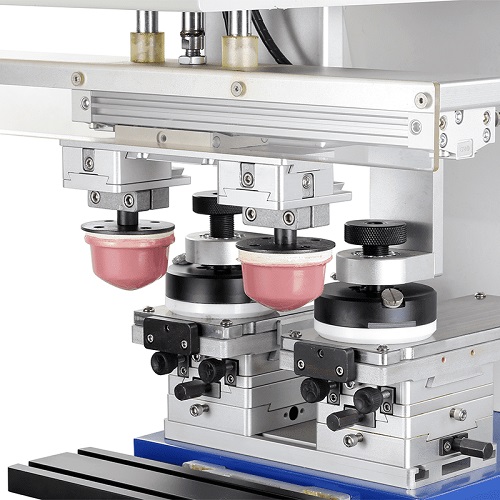
  • Máy in tampon nào mang lại năng suất cao hơn trong vận hành bán tự động? In một màu so với in nhiều màu
    Máy in tampon nào mang lại năng suất cao hơn trong vận hành bán tự động? In một màu so với in nhiều màu
    Dec 19, 2025
    So sánh các tính năng năng suất của máy in tampon Khám phá sự khác biệt về năng suất giữa máy in tampon một màu và nhiều màu.Đặc trưngMáy in tampon một màu WINNEOMáy in tampon nhiều màu WINNEOTốc độ inTốc độ cao cho các bản in một màu.Năng suất lên đến 1000 sản phẩm mỗi giờ.Thời gian thiết lậpThiết lập nhanh cho mực đơn.Thời gian thiết lập lâu hơn khi sử dụng nhiều loại mực.Độ phức tạp của quy trình làm việcQuy trình đơn giản và dễ hiểu.Phức tạp với nhiều bước.Sự phù hợp của công việcPhù hợp nhất cho các thiết kế đơn giản.Thích hợp cho các thiết kế phức tạp, nhiều màu sắc.Yêu cầu đào tạoĐộ phức tạp của quá trình huấn luyện thấp.Cần trình độ đào tạo từ trung bình đến cao.Nhu cầu bảo trìCác công việc bảo trì tiêu chuẩn.Cần kiểm tra thường xuyên hơn.Hiệu quả chi phíGiảm chi phí vận hành cho các công việc đơn giản.Chi phí ban đầu cao hơn nhưng hiệu quả đối với các công việc phức tạp.Khả năng màu sắcChỉ in một màu.In được tối đa sáu màu. Bạn sẽ đạt được năng suất cao hơn với máy in tampon nhiều màu khi công việc của bạn liên quan đến các thiết kế phức tạp hoặc yêu cầu nhiều màu sắc. Nếu công việc in ấn của bạn đơn giản và chỉ cần một màu, máy một màu thường hoạt động nhanh hơn và hiệu quả hơn. Năng suất phụ thuộc vào loại công việc, tốc độ thiết lập máy và kỹ năng vận hành của bạn. Xu hướng thị trường cho thấy máy nhiều màu chiếm ưu thế trong các ngành công nghiệp có nhu cầu tùy chỉnh cao, trong khi máy một màu đang ngày càng phổ biến trong các doanh nghiệp nhỏ. Sự lựa chọn giữa mỗi loại máy in tampon bán tự động phản ánh nhu cầu và mục tiêu sản xuất cụ thể của bạn. Những điểm chính cần ghi nhớ·Chọn máy in tampon một màu cho các công việc đơn giản. Máy này có thời gian thiết lập nhanh hơn và hiệu quả cao hơn cho các công việc khối lượng lớn.·Nên chọn máy in tampon nhiều màu khi cần in các thiết kế phức tạp. Máy này cho phép in nhiều màu trong một chu kỳ, giúp tăng năng suất.·Hãy xem xét thời gian chuyển đổi và thiết lập. Máy in một màu cần ít thời gian hơn cho việc thay đổi công việc, trong khi máy in nhiều màu giúp tiết kiệm thời gian khi in số lượng lớn.·Đánh giá các tác vụ in ấn phổ biến nhất của bạn. Chọn loại máy phù hợp với độ phức tạp của công việc và yêu cầu về màu sắc để đạt kết quả tối ưu.·Đầu tư vào đào tạo người vận hành. Người vận hành lành nghề sẽ nâng cao năng suất bằng cách giảm thiểu lỗi và duy trì quy trình làm việc trơn tru. Năng suất của máy in tampon bán tự độngSo sánh quy trình làm việc và tốc độKhi so sánh máy in tampon một màu và nhiều màu, bạn sẽ nhận thấy sự khác biệt về cách mỗi máy xử lý quy trình làm việc và tốc độ. Máy in tampon một màu thường có quy trình đơn giản. Bạn nạp vật liệu in, thiết lập mực và bắt đầu in. Người vận hành quản lý từng bước, giúp quy trình làm việc đơn giản và hiệu quả đối với các công việc chỉ cần in một màu.Máy in tampon nhiều màu làm tăng thêm các bước trong quy trình làm việc. Bạn cần căn chỉnh từng màu, điều chỉnh các miếng đệm và theo dõi trình tự in. Những máy này thường sử dụng bàn xoay hoặc con lăn để di chuyển vật liệu giữa các trạm màu khác nhau. Cấu hình này cho phép bạn in các thiết kế phức tạp trong một chu kỳ, giúp tăng tốc độ cho các công việc in nhiều màu. Bạn có thể đạt tốc độ lên đến 1000 sản phẩm mỗi giờ với các máy in tampon nhiều màu tiên tiến, đặc biệt là khi in nhiều màu cùng một lúc. Loại máyĐộ phức tạp của quy trình làm việcTốc độ in một màuTốc độ xử lý các tác vụ nhiều màuĐơn sắcĐơn giảnCaoThấpNhiều màuTổ hợpVừa phảiCao Nếu bạn chỉ in một màu, thì đó là in một màu duy nhất.máy in tamponLàm việc nhanh hơn vì bạn tránh được các bước thừa. Nếu công việc của bạn cần nhiều màu, máy in tampon nhiều màu sẽ tiết kiệm thời gian bằng cách in tất cả các màu trong một lần. Bạn nên chọn máy phù hợp với yêu cầu công việc của mình để tối đa hóa năng suất.Mẹo: Đối với các đơn hàng số lượng lớn với thiết kế đơn giản, máy in tampon một màu giúp bạn hoàn thành nhanh hơn. Đối với các bản in nhiều màu, chi tiết, máy in tampon nhiều màu giúp tăng năng suất. Thời gian chuyển đổi và thiết lậpThời gian chuyển đổi và thiết lập đóng vai trò quan trọng trong năng suất tổng thể. Khi chuyển từ công việc này sang công việc khác, bạn cần thay mực, điều chỉnh phụ kiện và thiết lập máy cho thiết kế mới. Thời gian bạn dành cho các công việc này ảnh hưởng đến số lượng sản phẩm bạn có thể in trong một ngày.Bạn sẽ được hưởng lợi từ các máy in tampon có các tính năng như cốc mực kín và giá đỡ có thể điều chỉnh. Những tính năng này giúp bạn thay đổi công việc nhanh chóng và giảm thời gian ngừng hoạt động. Dưới đây là một số cách thời gian thay đổi công việc ảnh hưởng đến năng suất:·Việc chuyển đổi nhanh chóng giúp giảm thời gian chết giữa các công việc in, nâng cao hiệu quả sản xuất tổng thể.·Các máy có tính năng như cốc mực kín và giá đỡ điều chỉnh được giúp thay đổi vật liệu nhanh hơn.·Giảm thời gian thiết lập giúp tiết kiệm thời gian in ấn, từ đó tác động trực tiếp đến năng suất.Máy in tampon một màu thường yêu cầu ít thời gian thiết lập hơn vì bạn chỉ cần chuẩn bị một loại mực và một miếng đệm. Bạn có thể chuyển đổi công việc nhanh chóng, giúp duy trì dây chuyền sản xuất hoạt động liên tục. Máy in tampon nhiều màu cần nhiều thời gian thiết lập hơn vì bạn phải chuẩn bị nhiều loại mực và căn chỉnh nhiều miếng đệm. Tuy nhiên, nếu bạn in nhiều công việc nhiều màu liên tiếp, bạn sẽ tiết kiệm thời gian vì không phải in từng màu riêng biệt.Bạn nên cân nhắc tần suất thay đổi công việc và độ phức tạp của bản in. Nếu bạn thường xuyên thay đổi công việc, máy in tampon một màu có thể mang lại năng suất cao hơn. Nếu bạn in số lượng lớn các thiết kế nhiều màu, máy in tampon nhiều màu sẽ giúp bạn làm việc hiệu quả hơn. Các yếu tố chính: Số lượng màu sắc và độ phức tạp của công việcẢnh hưởng của số lượng màu sắc đến năng suấtKhi chọn máy in tampon, bạn cần cân nhắc số lượng màu sắc trong thiết kế của mình. Nếu chỉ in một màu, bạn có thể hoàn thành công việc nhanh chóng với máy in tampon một màu. Bạn chỉ cần đặt vật liệu in, thiết lập mực và in trong một lần. Quy trình này hoạt động tốt cho các logo đơn giản, số seri hoặc các hình ảnh đồ họa cơ bản.Khi công việc của bạn yêu cầu nhiều màu sắc, bạn sẽ phải thực hiện nhiều bước hơn. Máy in tampon nhiều màu cho phép bạn in nhiều màu trong một quy trình duy nhất. Bạn không cần phải in từng lô sản phẩm cho mỗi màu. Tính năng này giúp bạn tiết kiệm thời gian và giảm chi phí nhân công. Bạn có thể xử lý các thiết kế phức tạp một cách hiệu quả hơn.Bảng dưới đây cho thấy mỗi loại máy xử lý các công việc phức tạp như thế nào: Tính năngMáy nhiều màuMáy in một màuKhả năng in ấnNhiều màu sắc trong một hoặc vài lần tô.Cần in nhiều lần đối với các màu khác nhau.Hiệu quả cho các công việc phức tạpHiệu quả hơn, tiết kiệm thời gian và nhân công.Chậm hơn đối với các công việc phức tạpĐộ phức tạp của thiết kếPhức tạp hơn với các hệ thống điều khiển tiên tiến.Thiết kế đơn giản hơn Nếu bạn in các hình ảnh chi tiết hoặc cần hình ảnh độ phân giải cao với nhiều màu sắc, máy in tampon nhiều màu sẽ giúp bạn đạt được năng suất cao hơn. Bạn tiết kiệm thời gian vì không cần phải in cùng một sản phẩm cho mỗi màu. Bạn cũng giảm được lượng hàng tồn kho trong quá trình sản xuất, giúp quản lý dây chuyền sản xuất hiệu quả hơn.Mẹo: Nếu doanh nghiệp của bạn in sản phẩm nhiều màu, bạn nên cân nhắc sử dụng máy in tampon nhiều màu để tăng hiệu quả và giảm nhân công. Đánh giá mức độ phù hợp của đơn xin việc theo loại công việcBạn cần lựa chọn máy in tampon phù hợp với loại công việc bạn thường xuyên thực hiện. Máy in tampon một màu hoạt động tốt nhất cho các công việc đơn giản. Bạn có thể sử dụng chúng để đánh dấu thiết bị y tế, in số seri trên thiết bị công nghiệp hoặc thêm logo vào thiết bị điện tử tiêu dùng. Những công việc này cần bản in rõ nét, bền nhưng không yêu cầu phối màu phức tạp.Máy in tampon nhiều màu phù hợp với các công việc đòi hỏi thiết kế phức tạp và nhiều màu sắc. Bạn có thể tìm thấy những máy này trong các ngành công nghiệp như mỹ phẩm, đồ chơi và ô tô. Ví dụ, một công ty khởi nghiệp công nghệ làm đẹp cần in ba màu, độ phân giải cao trên các dụng cụ thoa độc đáo. Máy in nhiều màu giúp thực hiện điều này chỉ trong một quy trình, tiết kiệm thời gian và đảm bảo chất lượng nhất quán.Bạn có thể thấy máy in tampon nhiều màu được sử dụng cho:·Thiết bị quảng cáo·Bao bì nhựa và thủy tinh·Bảng điều khiển và núm điều khiển ô tô·Sản phẩm y tế và dược phẩm·Thiết bị gia dụngMáy in tampon một màu có những ưu điểm vượt trội:·Đánh dấu dụng cụ và ống tiêm trong lĩnh vực y tế·Quảng bá thương hiệu trên điện thoại thông minh và máy tính xách tay·Số sê-ri và cảnh báo an toàn trên máy móc hạng nặng·Đánh dấu hiệu quả trên các bộ phận được đúc phun và in 3D.Bạn nên xem xét các công việc in ấn thường xuyên nhất của mình và quyết định loại máy nào phù hợp với nhu cầu. Nếu bạn in các ấn phẩm đơn giản, số lượng lớn, máy in một màu sẽ mang lại tốc độ và độ tin cậy cao. Nếu bạn in các thiết kế phức tạp, nhiều màu, máy in nhiều màu sẽ cho kết quả tốt hơn và năng suất cao hơn.Lưu ý: Việc lựa chọn máy móc phù hợp phụ thuộc vào độ phức tạp của công việc và số lượng màu sắc bạn cần. Bạn có thể cải thiện quy trình làm việc và giảm chi phí bằng cách chọn máy móc phù hợp nhất với dây chuyền sản xuất của mình. Kỹ năng vận hành và bảo trì máy in tamponYêu cầu đào tạoBạn đóng vai trò then chốt trong năng suất của máy in tampon bán tự động. Trình độ kỹ năng của bạn quyết định tốc độ và độ chính xác khi hoàn thành mỗi công việc. Bạn phải căn chỉnh các vật phẩm bằng tay, duy trì quy trình làm việc và kiểm tra chất lượng từng bản in. Nếu bạn có kinh nghiệm và hiểu rõ máy móc, bạn có thể nâng cao cả tốc độ và chất lượng in.Máy in tampon một màu thường yêu cầu ít thời gian đào tạo hơn. Bạn sẽ học cách thiết lập cơ bản, xử lý mực và căn chỉnh vật liệu. Bạn sẽ nhanh chóng nắm vững quy trình và bắt đầu in ấn một cách tự tin. Máy in tampon nhiều màu cần kỹ năng nâng cao hơn. Bạn phải hiểu về căn chỉnh màu sắc, căn chỉnh tampon và điều khiển trình tự in. Bạn sẽ dành nhiều thời gian hơn để học cách quản lý nhiều màu sắc và điều chỉnh máy cho các công việc phức tạp. Loại máyĐộ phức tạp của đào tạoCác kỹ năng cần thiếtĐơn sắcThấpCăn chỉnh cơ bản, thiết lập mực inNhiều màuTrung bình đến caoĐăng ký màu sắc, sắp xếp trình tự, điều chỉnh miếng đệm Mẹo: Bạn có thể nâng cao năng suất bằng cách đầu tư vào đào tạo người vận hành. Người vận hành lành nghề sẽ giảm thiểu lỗi và duy trì quy trình làm việc trơn tru.Bảo trì và thời gian ngừng hoạt độngBảo trì định kỳ giúp máy in tampon của bạn hoạt động trơn tru. Bạn sẽ phải thực hiện các công việc bảo trì tương tự với cả máy in một màu và nhiều màu, nhưng máy in nhiều màu có thể cần được chú ý nhiều hơn do độ phức tạp của chúng.Các vấn đề bảo trì thường gặp bao gồm:·Các vấn đề về độ bám dính mực·Quản lý vòng đời của vật tư tiêu hao·Kiểm tra bảo trì định kỳBạn nên thực hiện các bước sau để giảm thiểu thời gian ngừng hoạt động:·Lau sạch miếng đệm và tấm tiếp xúc sau mỗi lần sử dụng.·Kiểm tra xem có cặn mực trên tất cả các bề mặt không.·Kiểm tra xem giá đỡ đế có được giữ thẳng hàng hay không.·Bôi trơn các bộ phận chuyển động thường xuyênNếu bạn bảo trì máy móc tốt, bạn sẽ tránh được những sự cố bất ngờ và duy trì tiến độ sản xuất. Máy in nhiều màu có thể cần kiểm tra thường xuyên hơn vì chúng có nhiều bộ phận chuyển động và trạm màu hơn. Bạn nên thiết lập lịch bảo trì định kỳ và đào tạo đội ngũ của mình để phát hiện sớm các vấn đề.Lưu ý: Bảo trì thường xuyên giúp kéo dài tuổi thọ máy in tampon và đảm bảo chất lượng bản in cao mỗi lần sử dụng. Lựa chọn máy in tampon phù hợpKhối lượng sản xuất và chi phíBạn cần xem xét khối lượng sản xuất của mình trước khi lựa chọn giữa các loại máy in tampon. Nếu bạn thực hiện các đơn hàng số lượng lớn với thiết kế đơn giản, máy in tampon một màu thường cho kết quả nhanh hơn và chi phí vận hành thấp hơn. Những máy này sử dụng ít mực hơn và cần ít điều chỉnh hơn, giúp bạn tiết kiệm tiền về lâu dài. Bạn cũng tốn ít chi phí đào tạo hơn vì người vận hành học cách sử dụng máy một màu rất nhanh.Máy in tampon nhiều màuMáy in nhiều màu hoạt động hiệu quả nhất khi bạn in các thiết kế phức tạp hoặc cần nhiều màu trên mỗi sản phẩm. Những máy này xử lý được số lượng lớn sản phẩm với đồ họa phức tạp, giúp tăng năng suất cho các công việc in nhiều màu. Bạn có thể phải trả nhiều tiền hơn ban đầu cho máy in nhiều màu, nhưng bạn sẽ đạt được hiệu quả cao hơn khi in các sản phẩm cần nhiều màu. Bạn cũng giảm được chi phí nhân công vì không cần phải in từng sản phẩm nhiều lần.Mẹo: Nếu doanh nghiệp của bạn in hàng nghìn sản phẩm với thiết kế chi tiết, máy in tampon nhiều màu sẽ giúp bạn tiết kiệm chi phí và tăng năng suất. Hướng dẫn quyết định lựa chọn máy mócBạn nên so sánh một số yếu tố trước khi lựa chọn máy in tampon cho hoạt động kinh doanh của mình. Bảng dưới đây thể hiện các tiêu chí quyết định chính: Tiêu chí quyết địnhSự miêu tảĐộ phức tạp của màu sắcĐánh giá độ phức tạp của các yêu cầu về màu sắc cho nhu cầu in ấn của bạn.Tốc độ inHãy xem xét tốc độ sản xuất và ảnh hưởng của nó đến hiệu quả tổng thể.Dễ sử dụngĐánh giá mức độ thân thiện với người dùng của máy móc đối với người vận hành.Các yếu tố chi phíPhân tích tác động về chi phí của từng loại máy móc đối với ngân sách của bạn. Bạn cần lựa chọn máy in phù hợp với loại công việc. Nếu bạn in các sản phẩm đơn giản, một màu, máy in tampon một màu sẽ mang lại tốc độ và độ tin cậy cao. Nếu bạn in đồ họa nhiều màu, máy in tampon nhiều màu sẽ cho kết quả tốt hơn và tiết kiệm thời gian. Bạn cũng nên cân nhắc đến kỹ năng của người vận hành và nhu cầu bảo trì. Máy in tampon chuyên dụng có thể giúp bạn đáp ứng các yêu cầu đặc biệt, chẳng hạn như in trên bề mặt cong hoặc sử dụng mực đặc biệt.·Hãy lập danh sách những công việc bạn làm thường xuyên nhất.·Hãy quyết định bạn cần bao nhiêu màu cho mỗi công việc.·Ước tính sản lượng hàng tháng của bạn.·So sánh chi phí của từng loại máy.·Hãy hỏi nhóm của bạn về nhu cầu đào tạo và bảo trì.Lưu ý: Máy in tampon chuyên dụng mang lại cho bạn sự linh hoạt hơn nếu bạn thực hiện các dự án tùy chỉnh hoặc các vật liệu đặc biệt.Việc lựa chọn máy in tampon phù hợp cho doanh nghiệp sẽ giúp bạn cải thiện quy trình làm việc và giảm chi phí. Tổng quan về máy in tampon WINNEOĐặc điểm của máy in tampon bán tự động tiêu chuẩnBạn sẽ thấy rằng WINNEO cung cấp mộtMáy in tampon bán tự động tiêu chuẩnĐược chế tạo để đạt độ chính xác và ổn định cao. Máy in tampon này sử dụng tấm thép dày cho thân máy, đảm bảo hoạt động đáng tin cậy ngay cả trong điều kiện sản xuất khối lượng lớn. Máy in tampon chất lượng cao của WINNEO sử dụng các linh kiện được gia công CNC. Những bộ phận này giúp bạn đạt được chất lượng và độ chính xác nhất quán. Bạn được hưởng lợi từ các linh kiện chính hãng FESTO/SMC, giúp giảm tỷ lệ hỏng hóc và thời gian ngừng hoạt động. WINNEO tích hợp hệ thống kiểm soát chất lượng toàn diện. Hệ thống này đảm bảo mọi máy in tampon đều đáp ứng các tiêu chuẩn nghiêm ngặt trước khi giao hàng. Bạn nhận được hỗ trợ sau bán hàng 24/7, giúp bạn giải quyết mọi vấn đề nhanh chóng. Hệ thống điều khiển trực quan và các cài đặt có thể điều chỉnh giúp máy in tampon bán tự động này dễ sử dụng. Ưu điểm của máy in tampon một màuBạn sẽ nhận được nhiều lợi ích khi lựa chọn máy in tampon một màu WINNEO cho các hoạt động bán tự động. Máy mang lại hiệu suất in cao, giúp bạn hoàn thành công việc nhanh chóng. Bạn vận hành máy dễ dàng với bộ điều khiển bàn phím vi điện tử. Máy có thể in trên bề mặt phẳng, cong và không đều, mang lại tính linh hoạt cao. Bảng dưới đây tóm tắt các ưu điểm chính: Lợi thếSự miêu tảHiệu suất in caoCác máy móc được thiết kế để đạt hiệu suất tối ưu, đảm bảo in ấn nhanh chóng và hiệu quả.Dễ sử dụngCác tính năng như bộ điều khiển bàn phím vi điện tử giúp đơn giản hóa quá trình vận hành.Tính linh hoạtCó khả năng in trên nhiều bề mặt khác nhau, bao gồm bề mặt phẳng, cong và hình dạng bất thường. Bạn cũng được hưởng lợi từ sự chú trọng chất lượng của WINNEO. Cấu trúc chắc chắn và các linh kiện chính xác giúp bạn duy trì kết quả nhất quán. Bạn sẽ thấy rằng máy in tampon bán tự động giúp giảm thời gian thiết lập và giữ cho quy trình làm việc của bạn luôn trơn tru. Ưu điểm của máy in tampon nhiều màuNhư bạn thấy, máy in tampon nhiều màu WINNEO mang lại những lợi ích độc đáo cho các công việc phức tạp. Máy in tampon này có thể in tới sáu màu trong một chu kỳ, giúp tăng năng suất của bạn. Bạn sử dụng hệ thống điều khiển vi tính để quản lý các chức năng và thao tác. Đầu in độc lập cho phép bạn điều chỉnh độ dày nét và tốc độ cho từng màu. Bạn định vị đế mực và bàn làm việc bằng các điều chỉnh trục X, Y và R. Máy sử dụng bàn xoay hoặc con lăn để hoạt động ổn định. Bạn có thể đạt tốc độ lên đến 1000 sản phẩm mỗi giờ, giúp bạn xử lý các lô hàng lớn.Máy in tampon WINNEO giải quyết các thách thức về bảo trì và thời gian ngừng hoạt động nhờ chất lượng chế tạo mạnh mẽ và các linh kiện chính xác. Bạn sử dụng các công cụ hiệu chuẩn để duy trì hiệu suất cao. Bạn dễ dàng tích hợp máy in tampon với các hệ thống hiện có của mình. Bạn nhanh chóng tiếp cận phụ tùng thay thế và dịch vụ kỹ thuật, giúp giảm thiểu thời gian ngừng hoạt động. WINNEO cung cấp các chương trình đào tạo và điều khoản bảo hành để bạn yên tâm sử dụng. Diện mạoSự miêu tảChất lượng chế tạoĐảm bảo độ bền và giảm tần suất sửa chữa.Độ chính xác của các bộ phậnNâng cao độ chính xác của bản in, giảm thiểu lỗi có thể dẫn đến gián đoạn hoạt động.Công cụ hiệu chuẩnViệc có sẵn các công cụ để hiệu chuẩn định kỳ giúp duy trì hiệu suất tối ưu.Khả năng tích hợpKhả năng tương thích với các hệ thống hiện có giúp giảm thiểu nhu cầu sửa đổi phức tạp.Hỗ trợ sau bán hàngViệc dễ dàng tiếp cận phụ tùng thay thế và dịch vụ kỹ thuật đảm bảo giải quyết sự cố nhanh chóng, giảm thiểu thời gian ngừng hoạt động.Chương trình đào tạoCung cấp cho người vận hành kiến ​​thức để sử dụng và bảo trì máy móc một cách hiệu quả.Điều khoản bảo hànhMang lại sự an tâm về việc sửa chữa và thay thế, giúp giảm thiểu thời gian ngừng hoạt động tiềm tàng. Bạn sẽ cải thiện quy trình làm việc và đạt được kết quả chất lượng cao khi lựa chọn máy in tampon bán tự động WINNEO phù hợp với nhu cầu của mình. Bạn có thể so sánh máy in tampon một màu và máy in tampon nhiều màu để tìm ra sản phẩm phù hợp nhất với mục tiêu sản xuất của mình.  Bạn sẽ đạt được năng suất cao hơn với máy in tampon nhiều màu cho các công việc phức tạp, nhiều màu. Máy in một màu hoạt động tốt nhất cho các công việc đơn giản, thay đổi màu sắc thường xuyên. Sự lựa chọn của bạn phụ thuộc vào độ phức tạp của công việc, số lượng màu sắc và khối lượng sản xuất. Sử dụng bảng bên dưới để đánh giá nhu cầu của bạn: Nhân tốSự miêu tảSố lượng màu sắcMáy in nhiều màu có thể in nhiều màu cùng một lúc.Tần suất chuyển đổiMáy in một màu giúp giảm thời gian ngừng hoạt động khi thay đổi màu sắc thường xuyên.Khối lượng sản xuấtMáy in nhiều màu giúp tăng hiệu quả khi sản xuất số lượng lớn.Yêu cầu cụ thểHãy lựa chọn máy móc có tính năng phù hợp với nhu cầu sản phẩm của bạn. ·Cân bằng giữa tốc độ và chất lượng in.·Cần xem xét khả năng tương thích vật liệu và các thách thức về bề mặt.·Phân tích chi phí so với hiệu quả.Hãy tham khảo ý kiến ​​nhà cung cấp hoặc chuyên gia để nhận được những lời khuyên phù hợp. Câu hỏi thường gặpĐiểm khác biệt chính giữa máy in tampon một màu và máy in tampon nhiều màu là gì?Bạn sử dụng máy in một màu cho các bản in đơn giản. Máy in nhiều màu xử lý các thiết kế phức tạp với nhiều màu trong một chu trình in. Loại máyTốt nhất choĐơn sắcCông việc đơn giảnNhiều màuĐồ họa phức tạp Máy nào có thời gian thiết lập nhanh hơn khi cần thay đổi công việc thường xuyên?Bạn thiết lập máy in một màu nhanh hơn. Bạn thay mực và đệm mực nhanh chóng. Máy in nhiều màu cần nhiều thời gian hơn để căn chỉnh màu và điều chỉnh đệm mực.Mẹo: Chọn máy in một màu nếu cần thay giấy in thường xuyên. Cả hai máy đều có thể in trên các bề mặt cong hoặc không đều không?Cả hai loại máy đều cho phép in trên bề mặt phẳng, cong hoặc không đều. Máy in tampon WINNEO cung cấp các cài đặt điều chỉnh được cho các hình dạng khác nhau.·Bề mặt phẳng·Bề mặt cong·Bề mặt không đều Máy nào tốt hơn cho sản xuất số lượng lớn với thiết kế chi tiết?Bạn sẽ đạt được năng suất cao hơn với máy in tampon nhiều màu cho các công việc in nhiều màu với số lượng lớn. Bạn có thể in nhiều màu trong một lần, tiết kiệm thời gian và nhân công.Máy in nhiều màu giúp tăng hiệu quả cho các lô hàng lớn, phức tạp. Kỹ năng của người vận hành có ảnh hưởng đến năng suất của cả hai loại máy móc không?Bạn cần có kỹ năng cơ bản để vận hành máy in một màu. Máy in nhiều màu đòi hỏi kỹ năng nâng cao về căn chỉnh màu sắc và sắp xếp miếng đệm. Loại máyTrình độ kỹ năng cần thiếtĐơn sắcNền tảngNhiều màuTrình độ cao  
    ĐỌC THÊM
1 2 3 4

để lại tin nhắn

để lại tin nhắn
Nếu bạn quan tâm đến sản phẩm của chúng tôi và muốn biết thêm thông tin chi tiết, vui lòng để lại tin nhắn ở đây, chúng tôi sẽ trả lời bạn sớm nhất có thể.
nộp

Thời gian làm việc

Nhận thông tin của bạn 24 giờ một ngày

Giờ Bắc Kinh: Thứ Hai đến Thứ Sáu 9:00-17:30


LIÊN HỆ VỚI CHÚNG TÔI :info@glwinneo.com

Trang chủ

Các sản phẩm

whatsApp

liên hệ